Ocean Shores embraces Missing and Murdered Indigenous People march
Published 1:30 am Wednesday, May 13, 2026
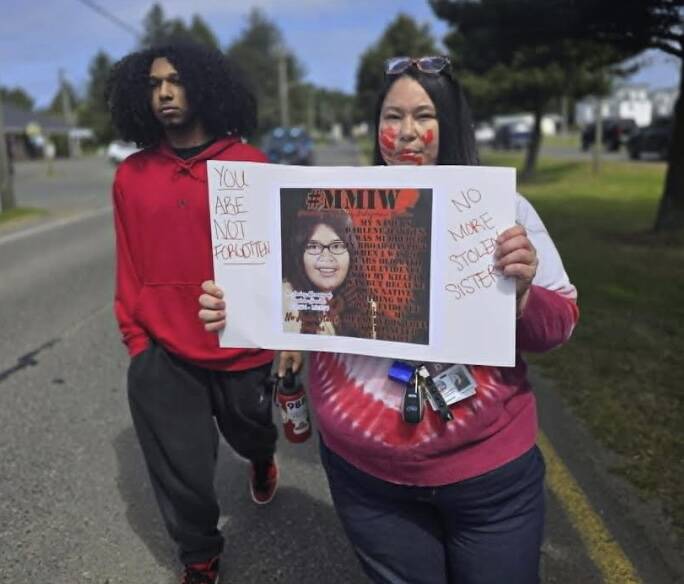

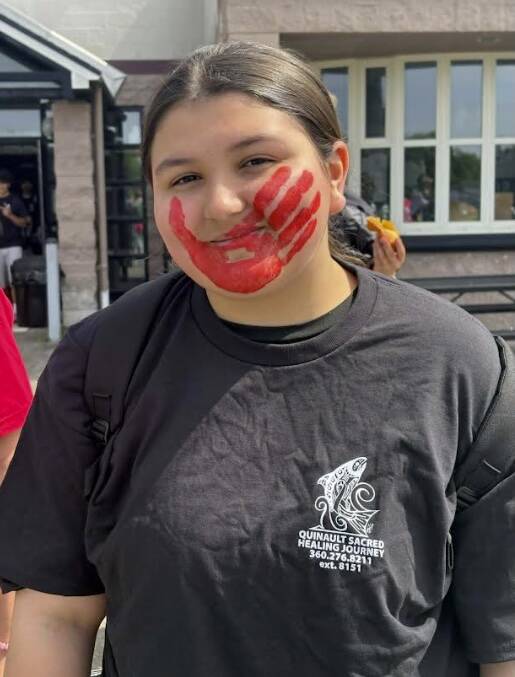
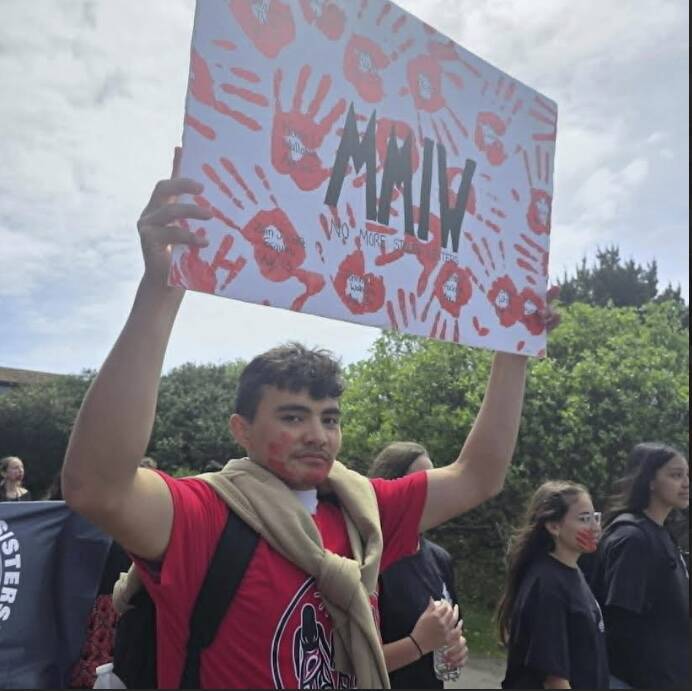


A Missing and Murdered Indigenous People march in Ocean Shores last Thursday was more than an event, it was a call to stand up, be seen and demand justice.
The march started at noon as members of the North Beach Native Education marched together from the gates of Ocean Shores through Point Brown, ending at the Ocean Shores Convention Center, to honor the lives of Missing and Murdered Indigenous People (MMIP) and raise awareness in the community.
They walked for those whose voices were taken, for families still waiting for answers and because silence is not an option.
The marchers featured painted red handprints covering their mouths and faces. They carried signs reading “No more missing Natives,” “Children are sacred,” “We will be heard, not silenced,” and “You are strong enough.”
Ocean Shores closed its main drag at noon to let the large group — students, staff and other supporters of Native education programs at schools in Grays Harbor and beyond — safely walk to the city’s convention center.
“Closing down the whole boulevard felt like something out of the movies,” said Chelsea Capoeman, an enrolled Quinault Indian Nation citizen and coordinator of the North Beach School District’s Indian Education Program.
The display followed a recent day of awareness for Missing and Murdered Indigenous People, or MMIP, which is nationally recognized as May 5.
The red handprints, which covered participants’ mouths, are a sign of solidarity for MMIP, and have become the “center of the symbolism representing how Native Americans perceive the connection between physical and spiritual world” and symbolize the silencing of past atrocities against native people, Capoeman said.
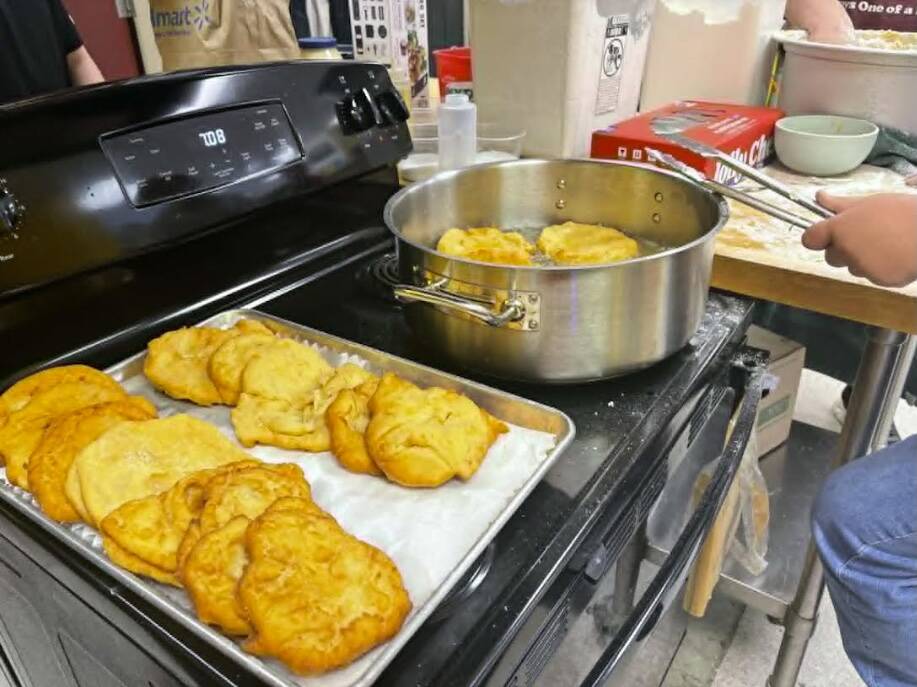
North Beach’s third annual MMIP event featured the walk, a traditional meal and songs and dances.
They served a meal with cultural staples: razor clam fritters and fry bread made at the hands of Chef Instructor Ryan Retana of the Culinary Arts Program at the North Bend Junior-Senior High School along with his student cooks.
After the group finished its walk down Point Brown, they gathered at the Ocean Shores Convention Center, where Denise Miño spoke. Miño is an Organizational Development Consultant, leadership coach, community organizer, speaker, and educator dedicated to helping individuals, teams, and communities lead with courage, compassion, and connection.
As a national speaker and facilitator, Miño is passionate about supporting youth and communities in recognizing their strengths, honoring their stories, and building a future based in dignity, resilience, cultural humility, and hope. Miño is also an instructor with the University of Washington Continuum College, where she teaches leadership. In addition, she is a consultant and trainer who has worked with Tribal organizations, schools, nonprofits, youth programs, government agencies, and community leaders across Washington state and nationally.
In 2022, Miño received the prestigious Sam Henny Award from the National Native American Human Resources Association in recognition of an innovative workplace harassment prevention training she developed and delivered in partnership with the Confederated Tribes of the Chehalis Reservation.
Tribal leader Charlene Hawkes also spoke.
Washington state has one of the highest rates of Missing and Murdered Indigenous People (MMIP) in the nation, with over 120 indigenous individuals reported missing as of April 2026. The crisis disproportionately impacts Indigenous people, who make up less than 2 percent of the state’s population but about 6 percent of homicide victims.
Between 2006 and late 2024, the homicide rate for Indigenous people in Washington was over three times higher than for non-Native people. The true numbers are likely higher due to systemic issues and inaccurate racial identification by law enforcement.