Growing Hoquiam’s urban forest
Published 1:30 am Friday, April 24, 2026
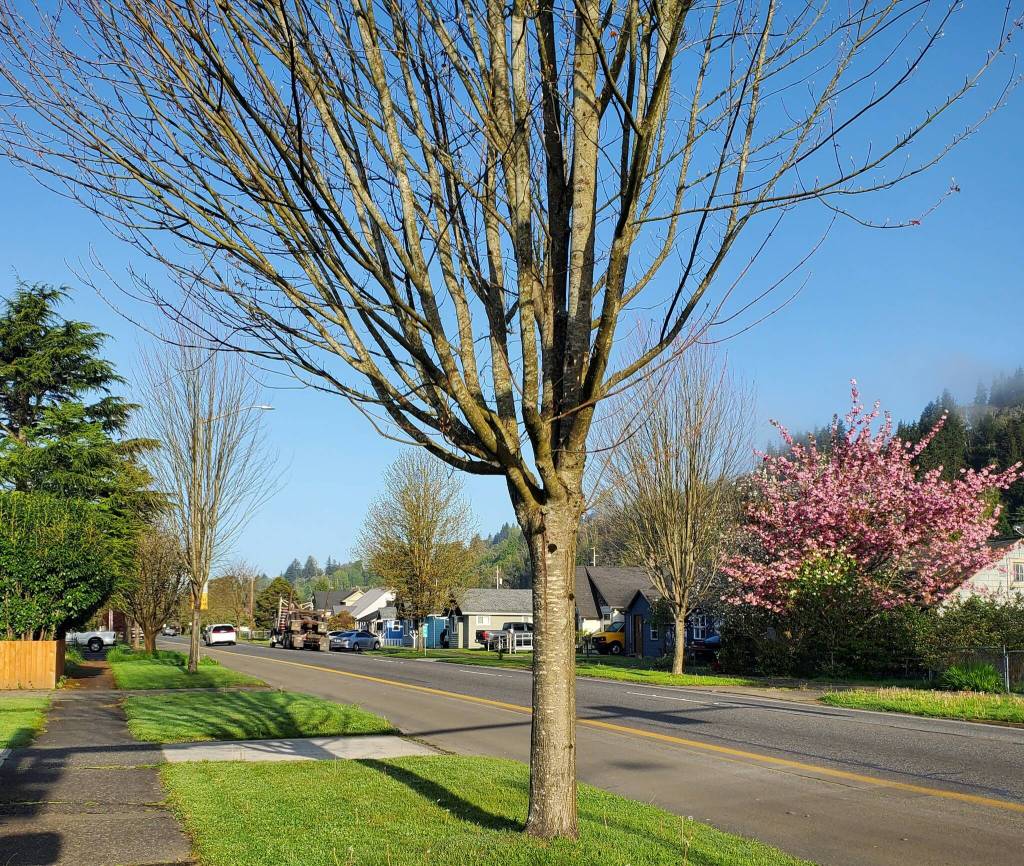
In celebration of Earth Day and Arbor Day, three Autumn Blaze maple saplings were planted along Hoquiam’s stretch of Sumner Avenue. Over the course of 17 years, 100 trees have been planted within rights-of-way throughout city, demonstrating a commitment to increasing its urban forest. And in 2025, the city became a Tree City USA, the only city in Grays Harbor County with this designation.
Since 2008, the city has had an urban forestry program, which Mayor Jack Durney proposed and the city council then adopted, and the city’s municipal code Title 6 Streets and Sidewalks gained a new chapter – 6.52 Street Trees.
The motivation for the program pre-dates 2008, when the city cut down trees along Emerson Ave. At that time, there wasn’t a process for notifying citizens when the city would cut down trees, and as a result, “there was a lot of community angst,” said Brian Shay, the city administrator.
Now, there is a removal process, which is outlined in the Street Trees chapter: the city being required to post a notice of removal 14 days prior to removal. Within that 14-day window, citizens may file a notice of appeal to the urban forestry advisory board, which will then review the appeal during a public hearing. Additionally, the chapter outlines the role of the urban forestry advisory board, how the master tree list is developed and the permit process for managing street trees on city property.
Although the urban forestry program was formed because of a need for transparency, “it’s really grown into also a priority of planting trees and becoming a Tree City USA community and really beautifying our city with street trees,” Shay said.
The program is funded by the urban forestry fund. This year’s budget is allocated between $15,000 for street tree maintenance, which includes planting, trimming and removal, and $125,000 for tree planting in the city forest. A requirement for being Tree City USA means a certain percentage of the budget or per capita of population is spent on an urban forestry program.
Increasing the number of street trees in the city is accomplished two ways. “We really try to encourage people in the residential neighborhoods to plant their own tree,” Shay said. “And we have a program where if the citizens will buy the tree, and it’s an approved tree from our tree list, so it has to be something that won’t damage sidewalks, we actually will plant the tree for them.”
And when new sidewalks are built, the design includes adding tree wells and planting street trees, such was the case in the new sidewalks in the downtown.
A crucial reason why residents can play a role in increasing the urban forest canopy by the planting trees in the right-of-way is because of how the city, decades ago, designed its streets. Instead of the sidewalk abutting the street, there is a right-of-way green space separating the street and sidewalk. This is particularly noticeable along Sumner Ave, there the city limits change from Aberdeen to Hoquiam.
“I would say that Hoquiam is kind of blessed with having the areas to do [planting],” Shay said, adding that of the trees on Sumner Ave, many were planted following the creation of the urban forestry program.
“One of the reasons that we planted the trees on Sumner was definitely to beautify the entrance into Hoquiam, to make it look more attractive. It really does give you a nice feeling when you drive through a community that has trees.”
The reason for only planting trees from the master tree list is because these trees won’t interfere with city infrastructure, such as powerlines or sidewalks. The master tree list is found in the Urban Forest Management Plan and was compiled in consultation with the Washington Department of Natural Resources Urban Forestry Program. (Available at https://www.cityofhoquiam.com/o/hoquiam/page/tree-city-award.)
Currently, the urban forestry board has five members who serve four-year terms. Their work consists of discussing appeals and planning for planting events that promote the urban forestry program, which is a requirement of being a Tree City USA city. With the board able to have at least nine members, there is an opportunity for residents who are interested in serving to join. Of those who are on the board, “everybody has a passion for urban forestry,” said Shay.
The city has an urban forest management plan based upon a GPS tree inventory that ArborPro Forest Management collected in May 2011. With the plan now 15 years old, “it would be good to update it,” Shay said.