Coast commercial fishermen feel the pinch of rising fuel prices
Published 1:30 am Monday, March 30, 2026
ILWACO — As Dungeness crab season limps to a historically low-volume finish, punishing fuel prices are putting a final dash of salt on an unsavory year for the Washington coast fleet.
As of March 23, Washington commercial crabbers have landed 9,382,410 pounds of crab, currently on pace for the lowest volume since the 2014-2015 season (7.5 million pounds).
Meanwhile, the average price of marine diesel fuel is hovering around a historic high of $6/gallon, capping what has been a forgettable season for commercial crabbers.
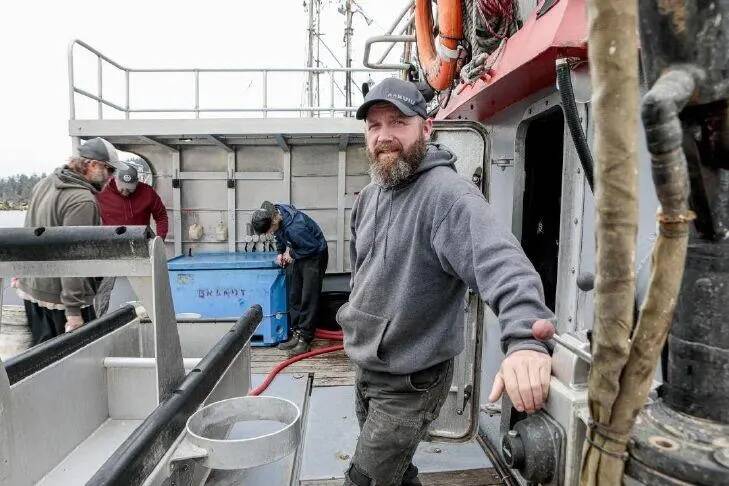
“Hopefully, we’re at the point where it won’t go up anymore,” said F/V Brandy owner and captain Ryan Walters before departing on a trip with crew on Saturday, March 28.
High fuel prices, low crab catch The fuel prices are “just about” as high as crew member Paul Munowich — a commercial fisherman the past 25 years — can remember, adding that the worst he can recall paying is $8/gallon in California.
“Fuel is one of our biggest expenses, just one of those things you’ve got to deal with,” said Munowich, adding that the vessel they were aboard holds 3,000 gallons of fuel, requiring a total fuel bill in excess of $15,000.
“It costs a little bit to fill up,” Munowich said in between loading boxes of frozen mackerel and clams. “That’s for sure.”
The increase in fuel expense has been an added burden in a typically lucrative Dungeness crab industry, one that set a Washington state record ex-vessel value in 2021-22 ($88 million) but only a fraction this year ($46 million).
“It’s been slow, a tough year,” Walters said. “The price has been good, just not the volume.”
Elevated fuel prices haven’t impacted how long or how far the crabbers go, but the added expense is felt in the end.
“It just affects the bottom line,” Munowich said. “That’s the problem with this industry — a lot of it gets dictated out of our control, but we’ve just got to keep fishing.”
The crew plan to crab for another month before transitioning to black cod around June and tuna in July, two fisheries farther offshore and consequently more impacted by fluctuations in fuel price.
‘We can’t always be the losers’
Local commercial salmon fishermen have been gearing up in recent weeks, with the season anticipated to open later in April.
The recent surge in fuel prices has been an added strain in an already deadly and stressful industry, one where commercial fisherman Ted Martin logged more than 50 years in pursuit of tuna and, more recently, salmon.
Escalating tensions in Iran, including the crises surrounding the Strait of Hormuz — the world’s most vital choke point for oil exports — are being felt locally at the fuel pump, particularly those who rely on diesel fuel for daily operation.
“The fuel price… If we’re paying that fuel price because Trump has his stupid, f***in’ war. … We just have to bump the price of our fish up. We can’t always be the losers. But I’m not going to worry about it, simple as that,” Martin said.
Charters hopeful
Local recreational charter offices are also feeling the heat of higher fuel prices as they prepare for the busier season, hopeful prices will fall before business peaks, in late spring through the summer.
“Right now we’ve made the decision to hold prices,” said Sea Breeze Charters owner Steve Sohlstrom. “We are hopeful the prices will fall as we approach the start of the primary season.”
A typical bottom fishing trip will use about 80 to 100 gallons of fuel of the 500-gallon capacity on the F/V Salty Dog, for instance.
“Fuel cost is a factor, no doubt about it,” Sohlstrom said, adding that an ‘ideal’ price would be below $5/gallon for diesel.