Forest rule change threatens steep tax losses
Published 1:30 am Monday, October 27, 2025
SOUTH BEND — Pacific County Commissioners Jerry Doyle, Lisa Olsen and David Tobin sent a scathing letter on Oct. 20 to the Washington Forest Practices Board (FPB) regarding a proposed increase in timber-harvest buffer zones along streams.
Rural counties and forestry groups are mounting a vigorous push against bigger setbacks away from small non-salmon-bearing streams, arguing that over the course of time the loss of timber acreage will add up to billions in lost local economic activity and millions less taxes that currently support government services. Washington state established the Forest Practices Act and the FPB in 1974. It is tasked with establishing laws to “protect salmon, clean water, and the working forest economy.”
Stream setback plan violates ‘the Washington Way’
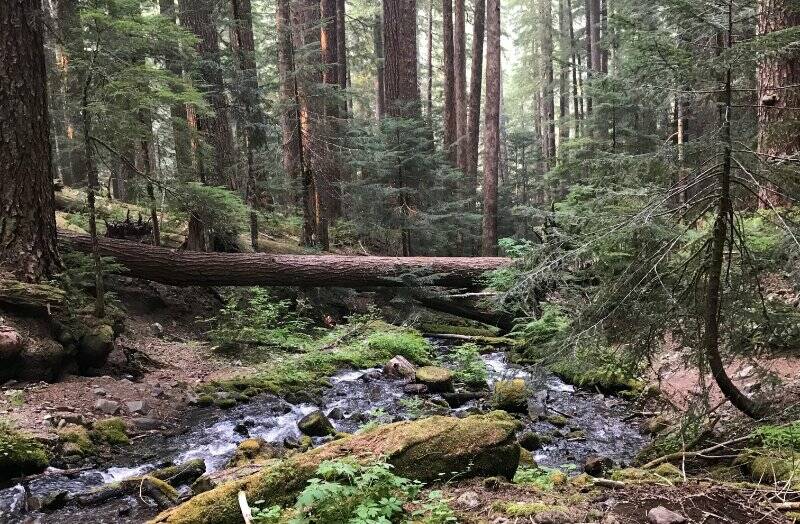
Current forest practices regulations — established in 2001 via the state Forest Practices Habitat Conservation Plan — requires a no-touch barrier of 50 feet for the first 200 feet upstream from a year-round stream’s fish/no-fish breakpoint. Beyond that point, the barrier is half the stream’s width from each side.
Substantially widening the setbacks, the proposed rule change responses to an analysis by the Washington Department of Ecology. This study said wider buffer zones are necessary to ensure fish-bearing streams remained cold enough. Current buffers are inadequate to ensure water temperatures remain cool enough on connected fish-bearing streams, the agency said.
The proposal has been met with stark opposition from rural counties and industry groups, including the Washington Farm Forestry Association and Washington Forest Protection Association.
According to the proposal there would be an estimated “$4,590 to $5,907 per acre reduction between harvestable and unharvestable areas” and “$2,345 to $3,003 per acre reduction between harvestable and partially harvestable areas.”
How big an impact?
However, opponents say if the rule change is approved on Nov. 12, the overall impact in western Washington could add up to between $4.7 to $7.9 billion over the next 45 years, equating to annual losses between $104 and $175 million.
In Pacific County alone, the regulation is predicted to result in an “immediate timber value loss” topping at over $259 million and a timber excise tax revenue loss around $12.9 million with an estimated 11.9% reduction in harvestable timber.
“The Naselle, Willapa Valley, and North River School Districts rely extensively on timber revenue for their existence,” the commissioners stated. “There would also be noticeable reductions to the North Pacific County EMS District, Timberland Regional Library, Willapa Harbor Hospital, the Ports of Willapa and Ilwaco as well as many local fire districts. These are services provided to our residents that do not operate from a flush cash position. Every one of these types of changes impacts them in a very real way, which impacts Pacific County citizens in a very real way.”
The could trickle down with significant impacts to the county’s economy with less available spending and loss of jobs, the commissioners argued.
“Rural areas of our state are being destroyed and continue to do more with less,” the commissioners stated. “Continuing to choke out our economies through unnecessary regulations is reckless and unconscionable. It is with fear of retribution that this letter is written in such a harsh manner, but we are at the point that our situation in these matters as a rural county cannot get much worse.”
Contentious meetings
The FPB held several contentious meetings this year, including one on June 6 where the board voted to approve the proposal.
Voting members that voted in favor of the proposal included representatives from the Washington State Department of Natural Resources, Washington State Department of Fish and Wildlife, DOE and two public members. Small forest landowners, large forest landowners, the Timber Products Union and a public member voted against the proposal. Members from the Washington Department of Agriculture and Washington Department of Commerce chose to abstain.
Until recently, two positions remained open on the board, including a position earmarked for a county commissioner or council member. The positions are appointed by Gov. Bob Ferguson.
According to Pacific County Commissioner Lisa Olsen, she was one of three vying for the spot on the board alongside Scott Bremmer (Lewis County) and Heidi Eisenhour (Jefferson County). Eisenhour was recently selected by Ferguson.
The county commission’s letter also alleges historical neglect of rural counties, including failure to allow control of burrowing shrimp in Willapa Bay. DOE continues to let the situation worsen by not giving shellfish farms a chemical option to stop the decimation of their business, the commissioners contend. The commission’s letter is available on the county’s website and includes a letter directed at county residents hoping to generate enough opposition that the state backs away from the setback expansion.