European green crab management season update
Published 1:30 am Tuesday, August 12, 2025
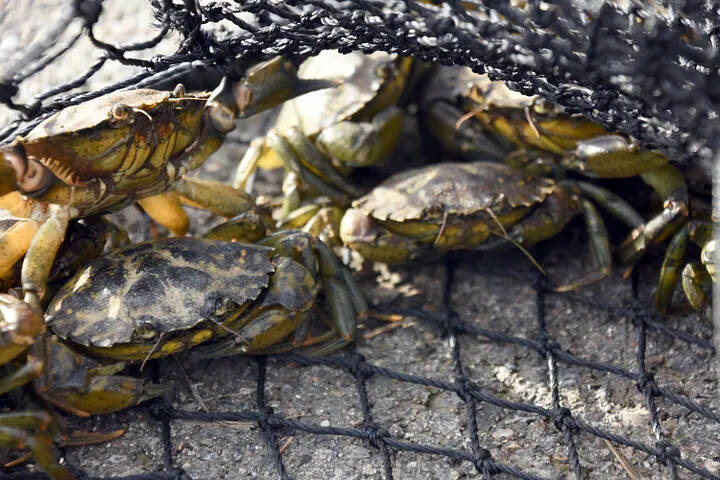
If you fish, boat, crab, beachwalk, or just read the news in Western Washington, by now you’ve probably heard about the invasive European green crab.
Native to Western Europe from the Baltic Sea to Morocco, the European green crab (EGC) is a damaging crustacean that threatens native shellfish, estuary habitats, eelgrass, the aquaculture industry, and other recreational, tribal, economic, and environmental values. The European green crab first became established in the United States in the mid-1800s, arriving by ship to New England where they contributed to dramatic declines in the soft-shell clam fishery.
Studies have shown these voracious crab can consume as many as 40 clams a day. In areas where European green crabs have established large populations for extended periods of time, they have had dramatic impacts on other species, particularly smaller shore crabs, clams and small oysters.
In addition to preying on shellfish, European green crab are vigorous diggers and have severely harmed New England’s eelgrass beds and estuaries. If allowed to do the same to Pacific Northwest eelgrass beds, estuaries, and nearshore marine environments, European green crab would impact the harvest of wild shellfish like geoducks and cockles, undermine shellfish businesses cultivating clams and oysters, and hurt salmon and forage fish recovery as well as complex native food webs.
European green crab were first discovered in Washington state in 1998 in Willapa Bay, where they remained in small numbers for over a decade. European green crab were first documented in Washington’s inland waters in the San Juan Islands in 2016.
Beginning around 2018, Washington Department of Fish and Wildlife (WDFW), other state and federal agencies, tribes, and partners began to detect significant increases in European green crab — likely linked to warmer water conditions, especially in 2021 — in areas including Willapa Bay, Grays Harbor, Makah Bay and Lummi Bay. In just a matter of years, green crab in these areas had exploded from a few hundred to tens of thousands of crabs, necessitating emergency control measures.
Since then, emerging “hotspots” have also been detected in Discovery Bay and Drayton Harbor, as well as smaller numbers of crab in northern Hood Canal near Seabeck and Quilcene Bay. Most recently, green crabs were detected this year near Port Gamble and Port Ludlow. In June a green crab molt was confirmed in False Bay on San Juan island — which was the first evidence of green crabs in San Juan County since 2019.
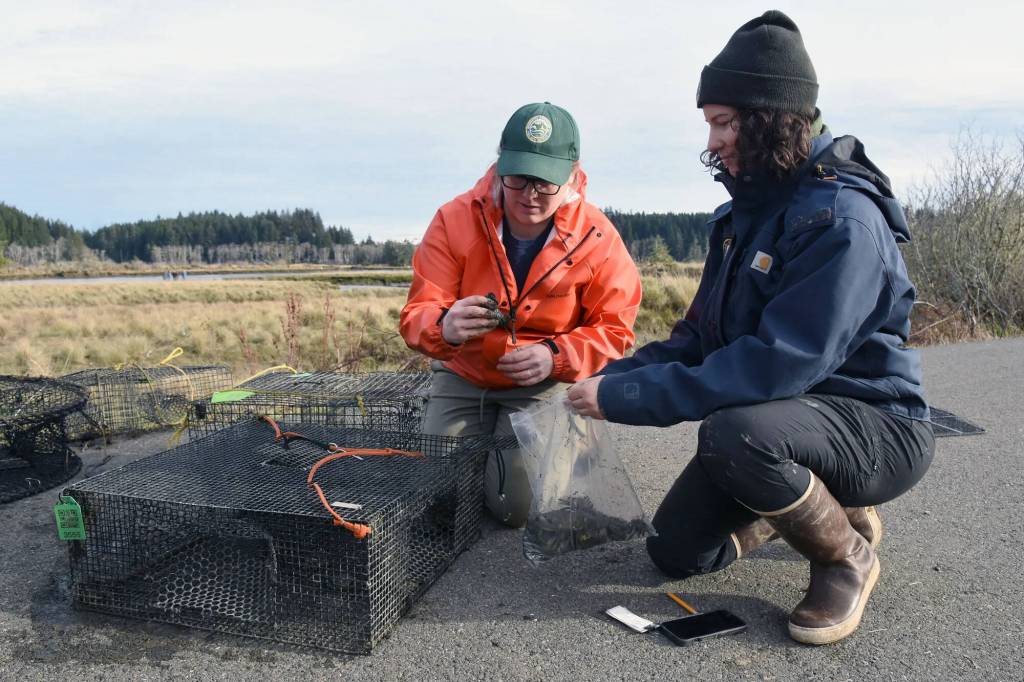
With more than 25 state employees, dozens of permitted partners, and thousands of traps deployed this field season, WDFW, co-managers, tribes, and partners have focused much of our efforts on the early detection of green crab by monitoring locations that offer good habitat for the species. If green crab are detected at a new location, WDFW crews conduct rapid response trapping or ongoing control trapping to reduce or eliminate those populations, and to prevent or slow the spread of EGC into new areas.
New detections, increasing coordination in North Puget Sound
European green crab are shore crabs and are found in shallow areas — typically less than 25 feet of water — including estuaries, mudflats, intertidal zones, and beaches.
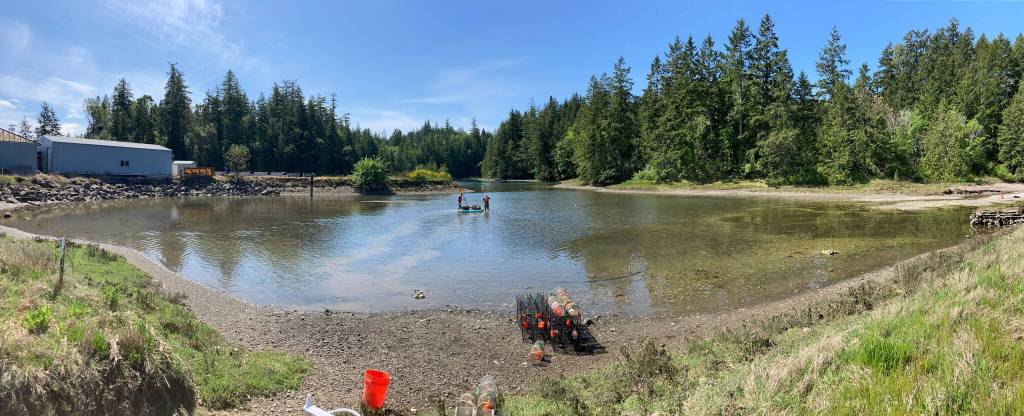
WDFW crews have been trapping for green crab at the Port Ludlow Marina since 2022 with no detections so far. However, this summer WDFW’s Aquatic Invasive Species (AIS) Division team gained access to a new parcel south of the marina with more suitable “pocket estuary” habitat. Thanks to this access and coordination with local private landowners, in July crews captured a total of 11 EGC and will continue trapping in the area through October.
Coordination with local partners and landowners has been a theme this summer in the San Juan Islands, too. The recent confirmation of European green crab in False Bay mobilized community members from the Friends of the San Juans to connect WDFW with shoreline property owners, allowing our crews access to private beaches to quickly deploy traps. Many of these community members are also volunteers trained by Washington Sea Grant and Washington State University’s Molt Search program at identifying and reporting EGC.
This dual approach of community scientists looking out for new detections and WDFW, tribes, and permitted partners following up with rapid response trapping exemplifies Washington’s strategy for managing European green crab — coordinating to keep this invasive species below population levels harmful to our environment, communities, and economy.
The Skokomish Tribe and WDFW have also been coordinating to trap and remove green crabs from Quilcene Bay, catching at least 42 EGC in an area popular for recreational clam and oyster gathering. Thankfully, European green crabs have not yet been confirmed south of central Hood Canal, Admiralty Inlet, and southern Whidbey Island, including no detections to date in Puget Sound proper.
Heavy trapping continues on the Washington coast
Unfortunately, European green crabs have become established in several of Washington’s coastal bays, which are exposed to green crab larvae drifting in from other crab populations and have extensive intertidal estuary habitat protected from wind and wave action.
The Washington coast, including Willapa Bay and Grays Harbor, also have an extensive aquaculture industry, lucrative fisheries for Dungeness crab, and a proud history of producing shellfish to feed Washington state and consumers around the nation.
In this environment and community, WDFW has focused on supporting local partnerships by providing grant funding, traps, bait, and other equipment, as well as training and permits to support EGC control to county conservation districts, Native American co-managers and tribes, and shellfish growers and industry associations.
Since the start of the 2025 trapping season, WDFW along with more than 40 co-managers, tribes, and partners have set over 30,000 traps, removing more than 300,000 crabs from waters in Washington’s Coastal Region. Since January 2022, more than one million EGC have been captured and removed from the coast, most from Willapa Bay, Grays Harbor and Makah Bay.
WDFW is also working with Tidal Grow AgriScience’s Pacific Gro fertilizer to sustainably use the biomass from these captured crab, producing 12,815 pounds of compost in 2023 and 29,650 pounds in 2024 — a 103% increase from the previous year. About 6,200 pounds of EGC have been composted so far in 2025.
Funding and support to manage green crab
Washington has a lot at risk from invasive European green crab. Not only could they harm our environment, ecosystems, and native species from clams to Chinook salmon, they also threaten Washington’s cultivated shellfish industry, which contributes more than $100 million annually to the state economy, as well as commercial Dungeness crab and other fisheries valued in the hundreds of millions of dollars annually. Shellfish are also a substantial recreational resource for the public and culturally important for tribes.
This spring the Washington State Legislature and Gov. Bob Ferguson continued their support by appropriating just over $12 million for green crab management in the two-year state budget that runs through June 2027. Approximately $9 million of that funding will be passed through WDFW to co-managers, tribes, and partners for continued statewide European green crab management.
Partners at the Washington State Department of Natural Resources (DNR) also received $2.5 million this biennium for managing green crab on state-owned aquatic lands.
This funding and collaboration is critical to implement the state’s long-term management plan for European green crab, which WDFW published in 2024 after a year-long collaboration with tribal governments, U.S. federal agencies, Washington state agencies, shellfish growers, public universities, and additional partners.
The plan includes detailed guidance for European green crab early-detection monitoring, rapid response and ongoing control trapping, and other efforts across defined management areas and coordination zones for Washington’s outer coast and Salish Sea including Puget Sound.
How to identify European green crab
Don’t be fooled by the name — European green crab can be green, red, orange, brown or yellow. To identify them, look for five spines or “teeth” on each side of the shell.
People are often surprised by how small these crabs are — the average green crab WDFW captures is around two inches across the shell. They can get up to four inches wide, much smaller than mature Dungeness or red rock crabs. In Washington, the European green crab is most often confused with the native hairy shore crab, helmet crab or kelp crab.
Beachgoers, waders, clam and oyster harvesters, and people crabbing off docks or piers in shallow areas are most likely to encounter green crab. Recreational shrimpers or crabbers operating in deep water are unlikely to catch them.
Rules and regulations
If you find a suspected European green crab or its shell in Washington, take photos and report it as soon as possible at wdfw.wa.gov/greencrab or through the Washington Invasive Species Council’s WA Invasives mobile app. Depending on the area, WDFW or permitted partners will follow-up with trapping to remove as many green crab as possible and slow their spread.
As a prohibited invasive species, it is illegal to possess a live European green crab in Washington. Currently, WDFW is not asking the public to kill suspected European green crab. This is to protect native crab, which are often misidentified.