‘There’s no such thing as a vote that doesn’t matter’
Published 1:30 am Friday, July 24, 2026

DEAR READER: As we study our voters’ pamphlets for the Aug. 4 Primary Election — disappointed by the boilerplate most candidates supplied — we’d do well to remember the historic role played by the Washington State Grange in securing our right to vote for whomever we choose.
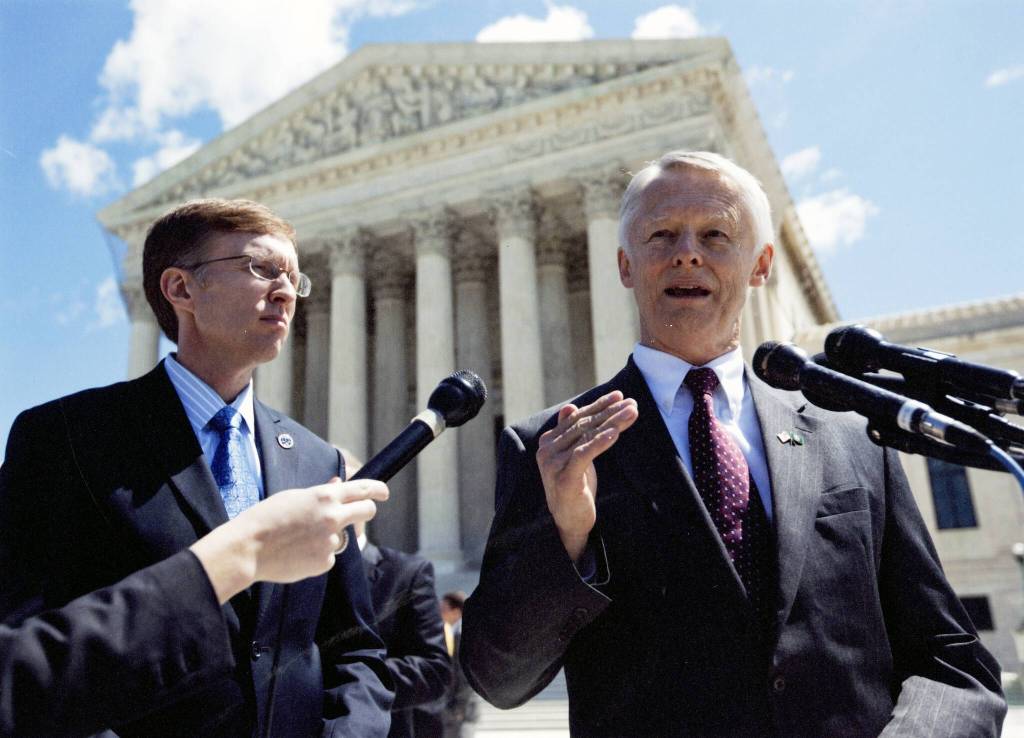
The Grangers stood up for us repeatedly, beginning in 1935 and again in 2004 after the courts struck down our “blanket” primary. And when the political party bosses challenged the constitutionality of the Grange’s second initiative, two Republicans — our secretary of state and attorney general — took our case to the U.S. Supreme Court and won.
Today, in Oregon and 30 other states with “closed” primaries, a “registered” Republican can’t vote for a Democrat, and vice versa. Before 1935, such was the case here. The political parties coveted their control over who got nominated and the juicy prospect of political patronage for the winners. Independent voters felt increasingly voiceless.
The Grange, a confederation of agrarian populists, was simultaneously liberal and conservative. Founded in 1867, it took root in Washington as we achieved statehood in 1889. Reform-minded Grangers here proved to be great, idealistic organizers. They advocated tax reform, denounced rate-setting collusion by the railroads, demanded equitable funding for rural schools and energetically supported women’s rights. The Grange also would become a major force in the push for public power.
WASHINGTON GRANGERS were lucky to have as their legislative lobbyist a self-described “dirt farmer” from Colville destined to become Speaker of the House. Charles W. Hodde, only 29 in 1935, was a superb legislative tactician, “endowed with both integrity and cunning,” as an admiring Republican put it.
Charlie Hodde seemed to be on a roll when Initiative 2, the Grange-sponsored “blanket” primary, sailed through the Democratically-controlled House 86 to 11. Though the resurgent New Deal Democrats also enjoyed a 37 to 9 majority in the State Senate, the open primary measure stalled there. The vote was 22-22, with 24 votes needed for passage. Some senators had taken umbrage that the powerful Grange News had editorialized that “any public man who is opposed to the blanket primary is a political buzzard.”
Hodde found a bird of a feather across the political aisle in State Sen. Fred Norman, a lunch-bucket Republican from Raymond. Norman’s callused hands gave evidence of his years as a farmer, logger and shipyard worker. After serving on the Raymond City Council, he parlayed a tobacco and candy store into a major business in Pacific County.
Norman changed his vote to “No” on the primary initiative “in order to be in a position to request reconsideration.” With that, the blanket primary passed 27-19, only to see the reconsideration reconsidered as the Senate debated whether to place the issue on the ballot as a referendum. When the 1935 session — one of the most contentious in state history — finally ended after six days of clock-stopping overtime, the blanket primary had survived. Washington voters were now free to “split tickets” by voting for candidates from different parties. And they loved it.
A lot of Third District Democrats split their tickets to send Fred Norman to Congress in the 1940s.
FAST FORWARD to June 26, 2000. The U.S. Supreme Court ruled that California’s blanket primary was unconstitutional because it violated the political parties’ “freedom of association.” The constitutionality of Washington’s own blanket primary was promptly challenged by the state Democratic, Republican and Libertarian parties. Paul Berendt, the Democrats’ chairman, offered an ecumenical catechism: “Catholics don’t choose the Mormons’ bishop and the Mormons don’t choose the Catholics’ pope.”
Handed a god-awful mess, our new Secretary of State, Sam Reed, conducted 11 public hearings around the state. Unsurprisingly, Washington voters strongly favored retaining the blanket primary.
Then, in a succession of conflicting decisions, the Federal District Court in Tacoma upheld Washington’s blanket primary as constitutional. The political parties promptly appealed, prevailing in the Ninth Circuit Court of Appeals.
The state of Washington and the Grange petitioned the U.S. Supreme Court to review the Ninth Circuit ruling. And in 2004, the Grange filed Initiative 872, proposing a “Top 2” primary where the two candidates with the most votes, regardless of party, would advance to the General Election.
When the U.S. Supreme Court denied the state’s request to review the Ninth Circuit decision, the “full weight of our state’s populist tradition” was now “coming down on the shoulders of the Legislature,” Reed said.
ON APRIL FOOL’S DAY 2004, Gov. Gary Locke, to the surprise of most, vetoed portions of the bill that established the Top 2 primary, leaving the electorate with a hated retrograde alternative that came to be called the “pick-a-party” primary.
All hell broke loose at the Office of the Secretary of State that September when voters were forced to choose partisan ballots. “The day the ballots went out, I received 14,000 emails calling me every name in the book for saying people couldn’t vote for whomever they chose,” Sam Reed remembers ruefully, as if it was his fault. Come November, nearly 60 percent of the voters backed the Grange Top 2 primary.
The political parties challenged the result.
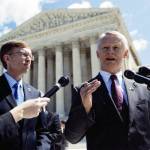
Three years later, the United States Supreme Court heard oral arguments on the constitutionality of a Top 2 Primary in an appeal filed by the state of Washington and the Washington State Grange. Attorney General Rob McKenna masterfully presented the state’s case, fielding 70 tough questions in 30 minutes.
March 18, 2008, was a memorable day for freedom of choice. The Supreme Court upheld the constitutionality of Initiative 872. Justice Clarence Thomas, writing for the 7-2 majority, noted that Washington’s Top 2 primary had been overwhelmingly approved by the voters. Overturning it, Thomas said, would be an “extraordinary and precipitous nullification of the will of the people.”
THIS YEAR, as always, our duty as voters is to cast informed ballots, mindful that freedom isn’t free. Less than 41 percent of our state’s five million registered voters participated in the 2024 primary. What does that say about the state of democracy in the state of Washington at a time when deceitful politicians want you to believe our elections are rigged to nullify the will of the people?
I’ll split my ticket and offer two quotes that speak volumes:
“A vote is like a rifle; its usefulness depends upon the character of the user.” — Theodore Roosevelt
“There’s no such thing as a vote that doesn’t matter.” — Barack Obama
John C. Hughes was chief historian for the Office of the Secretary of State for 17 years after retiring as editor and publisher of The Daily World in 2008.