‘To close the door is the worst kind of hypocrisy’
Published 1:30 am Saturday, July 18, 2026


DEAR READER: Over the past few weeks, you’ve been reading the first drafts of chapters for a potential book about the most inspiring people I’ve interviewed over the last 60 years, from Holocaust survivors and Green Beret medics to governors and senators. The working title is “Of Conscience & Courage.”
I hope you noticed that Slade Gorton, John Spellman, Robert F. Utter and Art Fletcher, besides being more principled than political, also happened to be Republicans. They believed the wellspring of America’s true greatness is a commitment to critical thinking, civility, compassion, and the determination to place democracy “before party and person,” as Richard Haass puts it in his remarkable book, “The Bill of Obligations.” It ought to be required reading in every high school civics class.
The Trump Administration, meanwhile, continues its vile attacks on immigrants, claiming most are “scum” –– except for white South Africans, of course. The hypocrisy of demonizing present-day immigrants, while celebrating our imperfect forefathers, snaps into focus when we dare to confront the truth that colonizing Europeans systematically displaced America’s indigenous people –– discounted as “merciless Indian savages” by the Declaration of Independence –– and imported half a million enslaved Africans to buttress their economy.
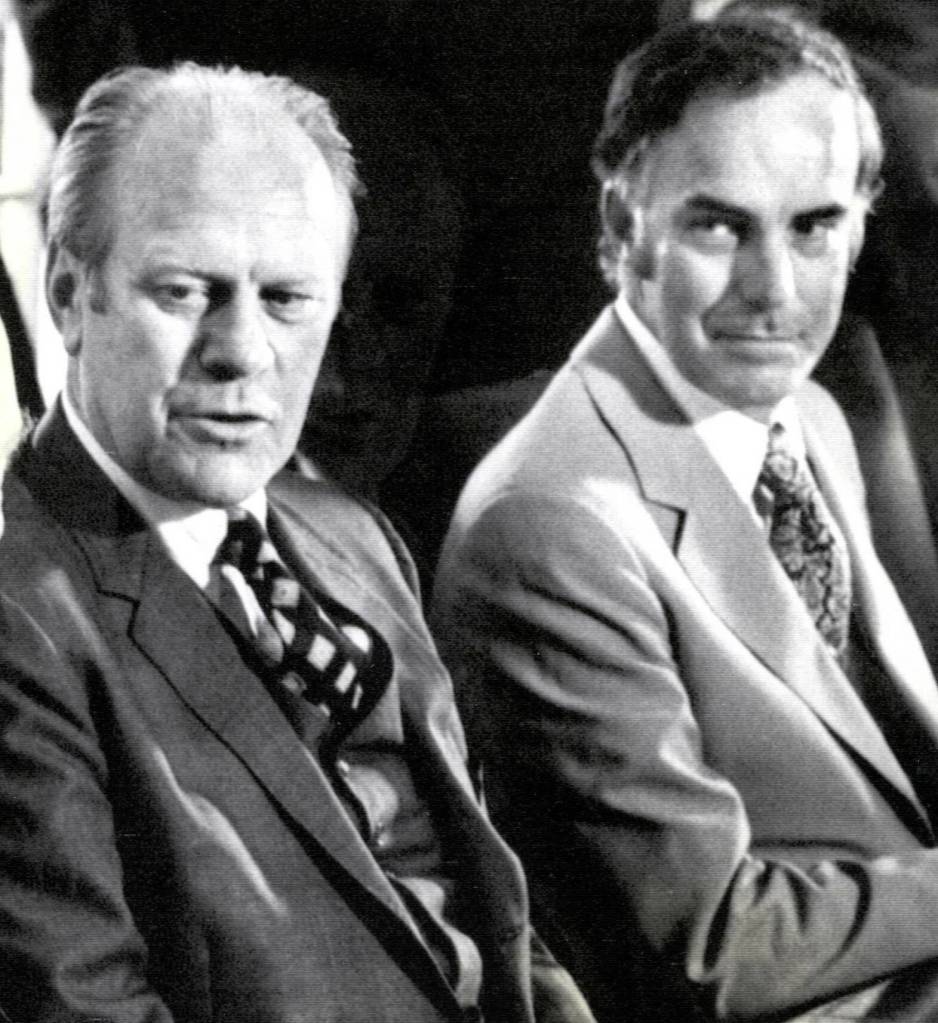
We also do well to remember what happened a half century ago when President Gerald R. Ford and Washington Gov. Dan Evans opened America’s door as the “dominoes” tumbled in Vietnam, Laos and Cambodia.
The story unfolds in “New Land, Southeast Asian Refugees Finding Home in Washington.” Now in its second edition, the 2025 book is the last project of my 17 years with the Office of the Secretary of State. My co-author is Edward Echtle Jr., one of our finest Northwest historians. Here is a condensed version of what we wrote in the opening chapter:
VIETNAM WAS THE first prime-time reality show war. Night after night in the spring of 1975, after long days dealing with the quarreling Democrats who controlled the Washington Legislature, Gov. Evans watched the final episodes with growing dismay. The North Vietnamese Army was steamrolling south — a juggernaut now that America had withdrawn its troops and slashed its aid.
On April 4, in San Francisco, Washington’s three-term Republican governor met with President Ford about the plight of thousands of Vietnamese orphans, many of them mixed-race children of American soldiers. The president had ordered his staff to cut bureaucratic obstacles for American families hoping to adopt an orphan. “This is the least we can do,” Ford said, “and we will do much, much more.” Further, an estimated 200,000 South Vietnamese affiliated with the U.S. through military-related jobs or business interests feared for their lives should the communists prevail. Ford directed “all available naval ships to stand off Indochina” to assist refugees.
Evans told reporters our state was “ready and eager” to help find loving homes for war orphans. The governor was also weighing how many Vietnamese refugees Washington could accommodate. Washington’s resettlement program would become a model for the nation.
IN SAIGON on April 30, 1975, “The American War” in Southeast Asia was over. The government of South Vietnam surrendered unconditionally as communist troops stormed the capitol. Over the next several days, 100,000 refugees fled the country aboard U.S. Air Force planes, South Vietnamese and U.S. naval vessels, cargo ships, and flotillas of ragtag vessels.
President Ford urged Congress to appropriate $507 million to help resettle at least 130,000 refugees around the nation. “These people chose freedom,” he said. “They do not ask that we be their keepers, but only for a time that we be their helpers.”
In California, 37-year-old Jerry Brown, a Democrat, was in his third month as governor. Brown branded Ford’s refugee relocation plan “haphazard,” saying he’d heard 500,000 to a million refugees might end up in California at a time when unemployment topped 9 percent. Federal officials reiterated that only about 130,000 refugees were expected, and promised comprehensive assistance for the newcomers.
Ford told a congressional delegation visiting the Oval Office he was “damned mad” over the opposition. “It just burns me up — these great humanitarians. They just want to turn their backs. We didn’t do it with the Hungarians; we didn’t do it with the Cubans; and dammit, we’re not going to do it now,” the president vowed. “It is not the America I know.”
Asked if he thought some of the opposition was racist, Hugh Scott of Pennsylvania, the Senate Republican Leader, said, “Enough to make you sick.”
A FEW DAYS LATER, at a press conference in Olympia, a reporter asked Evans, “Governor, what do you feel the role of the state of Washington should be in receiving refugees from Vietnam — with open arms, spend some money on it?”
Indignation palpable, Evans leaned forward and said:
“Well, first I have been absolutely astounded at the remarks made by some in political life in other states, as well as some made by many American citizens. This whole country and virtually everyone in it, with the single exception of the American Indians, came here as refugees in the first place. Most people came because they were either dissatisfied with where they were or were forced out of the countries in which they once lived. For us now to say that it is time for us to close the door just behind us, I think, is the worst kind of hypocrisy. … Certainly, I think we ought to receive them, can, and as far as I am concerned, the state of Washington will.”
Evans mobilized the Department of Emergency Services to oversee planning for the refugee resettlement. Estimates of how many might be destined for Washington were unclear, but he was confident they could be absorbed “with ease” and “have an opportunity to make a new life in a new land. … This is America’s job,” the governor said.
THE FIRST 34 refugees arrived at Camp Murray, the National Guard facility near Tacoma, on May 20, 1975. Hastily refurbished pre-World War II cottages with military-issue mattresses provided temporary homes for the refugees. Once matched with sponsors, the refugees received welfare grants — $380 for a family of four — and food stamps, plus coupons for free medical and dental care for six months. They were encouraged to become self-sufficient “as quickly as possible.” The federal government was reimbursing the states $500 per refugee, thanks to the Refugee Assistance Act President Ford shamed Congress into passing.
Within a month, “Bright Light Camp,” having placed 338 refugees around the state, was drawing national attention. The White House reported that thousands of Americans were signing up to assist the refugees through a toll-free hotline.
A tailor from Saigon was hired by Waugh’s Men’s Store in Aberdeen. Church groups on Willapa Harbor mobilized to help resettle newcomers there. And a group of Vietnamese nurses found sponsors at Grandview in the Yakima Valley.
By Christmas 1975, 4,052 Southeast Asian refugees had settled in Washington, including growing numbers of Lao and Cambodians in the wake of brutal communist reprisals in their countries. Washington soon had the fifth largest Indochinese refugee population in America.
AS THE NUMBER OF “boat people” fleeing Southeast Asia surged in late 1978, President Jimmy Carter and First Lady Rosalynn Carter embraced the refugees with the full fervor of their Christian faith. Carter signed the Refugee Act of 1980 and doubled the number of refugees from Southeast Asia to 14,000 a month. U.S. immigration laws were amended “to allow a special quota of 50,000 refugees each year to become American citizens.”
From 1977 to 1979, at a rate of 400 to 500 a month, Indochinese refugees continued arriving in Washington state. The newcomers propelled the total population of Southeast Asian refugees in Washington to nearly 12,000 by January of 1980. A third wave of refugees rolled into Washington in the 1980s after Vietnam eased restrictions on emigration.
Gov. Evans regarded the refugee relocation effort as one of the highlights of his life. Three days before he died — a month short of his 99th birthday in the fall of 2024 — Evans told me, “Jerry Brown was a former Jesuit seminarian. What was he thinking? For me, the choice couldn’t have been easier. Thousands of our citizens responded, as I knew they would.”
Many have suggested Evans’ political epitaph should be a line from his third inaugural address: “I’d rather cross the political aisle than cross the people.” But for thousands of Southeast Asian refugees and their descendants this sentiment is more memorable: “Most people came because they were either dissatisfied with where they were or were forced out of the countries in which they once lived. For us now to say that it is time for us to close the door just behind us, I think, is the worst kind of hypocrisy.”
“New Land” is available at https://www.sos.wa.gov/, as well as at the Polson Museum in Hoquiam and Pacific County Historical Society in South Bend.
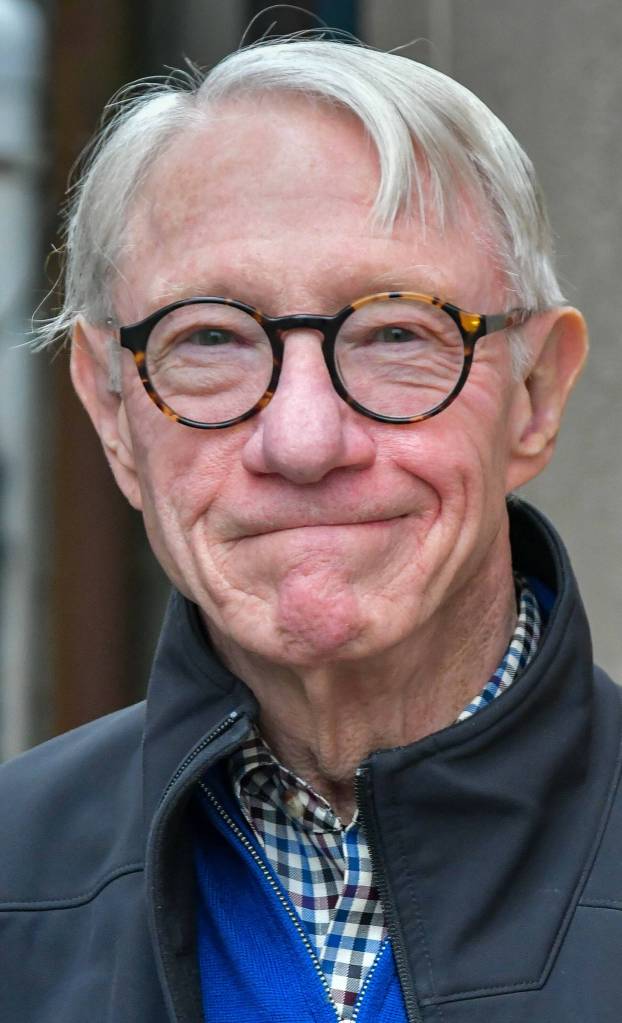
John C. Hughes was chief historian for the Office of the Secretary of State for 17 years after retiring as editor and publisher of The Daily World in 2008.