Farmers, Ranchers, and Resource-Based Communities — Take Note
Published 1:30 am Tuesday, April 21, 2026
I am deeply disappointed by efforts to portray Washington’s new non-fish stream (Np) buffer rule as a straightforward triumph of science, law, and consensus. This rule carries with it over $1 billion in costs to the state of Washington with no discernible benefit to fish. Let that sink in for a moment.
I was a timber caucus representative who actively negotiated Forests and Fish — the agreement that became the foundation of a 50-year Habitat Conservation Plan that brought together tribes and forest landowners in support of salmon recovery and a viable forest industry. The stakeholders who helped build that agreement should be especially troubled by what this process became.
No one disputes the importance of clean water, healthy streams, and salmon recovery. Private forest landowners have contributed thousands of acres of riparian habitat, restored hundreds of miles of fish spawning grounds, and operated for decades under one of the most comprehensive forest practices systems in the country — because those goals matter. Rules built on the Forests and Fish Agreement are designed to provide a durable framework: one that protects public resources and dramatically improves conditions for fish while preserving the viability of working forests and the rural communities that depend on them. The new Np rule does not follow the intent or discipline of that agreement.
Adaptive management — a collaborative, evidence-based process for revising rules when credible science identifies a failed objective — is one of the pillars on which Forests and Fish was founded. Assurances essential to the Habitat Conservation Plan were granted in direct recognition of that program and its commitment that rule changes would be driven by sound science and a collaborative process.
The new Np rule is a flagrant violation of that commitment. The Department of Ecology reinterpreted the applicable legal standard without changing the law, narrowed the range of scientific alternatives under consideration, and then told everyone the outcome was compelled by “science and law.” It effectively imposed a new goal — “no measurable change” in water temperature, any time, any place — without amending the law through proper channels.
For the first time in the history of Forests and Fish, the parties refused to resolve their differences through science, collaboration, and negotiation rather than dictated outcome. The foundation of the agreement called on all parties to work through disagreements at the table, using the best available science — the spirit that courageous leaders like Billy Frank Jr. and Stu Bledsoe brought to this process from the beginning. A framework designed to build trust and durable solutions has instead undermined both.
The public deserves a straight answer to one fundamental question: for all the cost, all the conflict, and all the rhetoric, where is the demonstrated fish benefit from this rule change?
That is the question supporters of the Np rule keep skating past. There is no shortage of talk about temperature, risk, and precaution. But responsible state policymakers are supposed to ask whether a specific regulatory expansion, at a specific cost, produces a demonstrated benefit before imposing it on private landowners and rural economies. That question is not anti-salmon. It is not anti-science. It is basic accountability.
Once agencies can reinterpret standards on the fly, work around the balance built into collaborative systems, and eliminate meaningful alternatives, the problem is bigger than one buffer rule. The problem is that the system no longer works the way it was promised to work — and the result is $1 billion in costs with no discernible benefit.
The risk does not stop with forestry. Farmers and other resource-based communities face the same exposure when the Department of Ecology can impose arbitrary standards to advance regulatory goals unsupported by science or meaningful consideration of economic consequences for affected communities.
Washington’s leaders must do better.
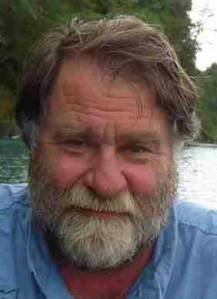
Wade Boyd is a retired forester and past president and executive committee and board of trustees member of the Washington Forest Protection Association.