The well-intentioned but misguided ideas about green crab
Published 1:30 am Monday, March 16, 2026
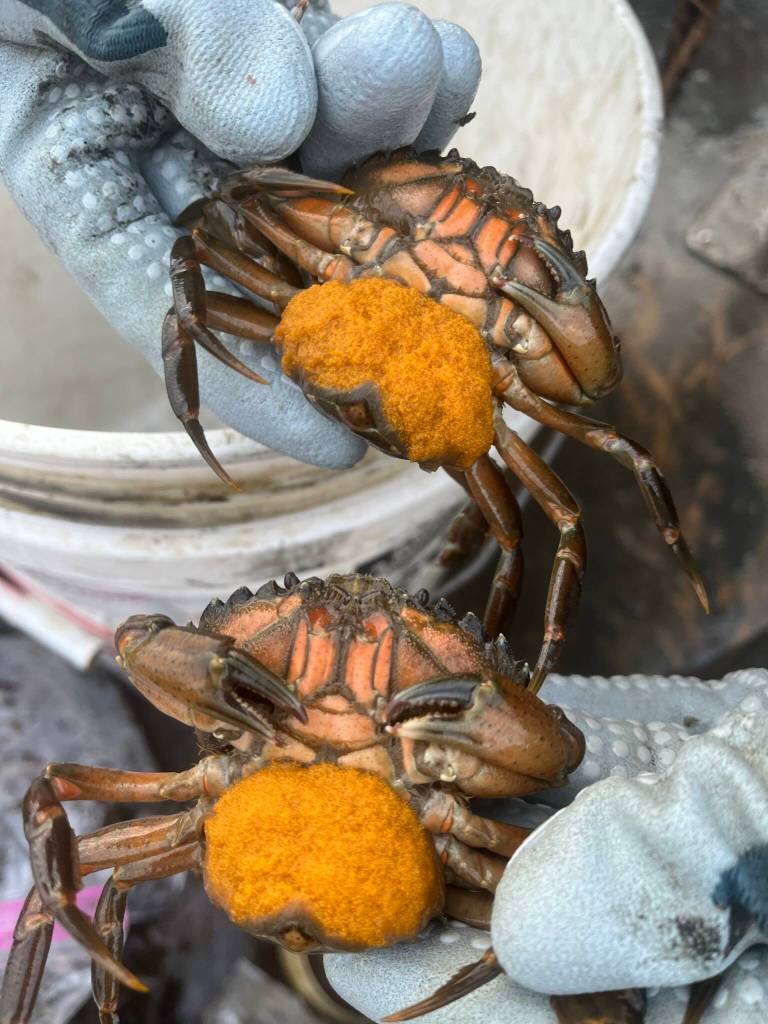
At the Pacific Conservation District, European Green Crab are a common topic of discussion.
In recent weeks, through Facebook posts, research publications, and newspaper articles, we have seen an uptick in the public joining that conversation. We want to set the record straight about European Green Crab in Willapa Bay and respond to some of the misunderstandings we have seen.
For the uninitiated, European Green Crab are a noxious, invasive species present on both coasts of the United States that are infesting our own backyard: Willapa Bay. They are a small crab species with a huge appetite. They are considered ecosystem engineers, they massively alter any environment they are introduced to by predating upon massive quantities of native species and destroying crucial habitats like eel grass. Not only do these invaders pose a huge risk to the natural balance of Willapa Bay, but they threaten the livelihoods of those who rely on the bay.
With the environmental and economic stakes so high, we take this threat seriously and want our community, and beyond, to be armed with the facts of what we face. Much to our surprise, two articles came across our desks in the past week touting otters as a natural control for the green crab invasion.
Let’s get this out of the way first: otters are great and they play an incredibly important role as a keystone species on our coast. But in no uncertain terms, they are not the magic bullet against green crab in Willapa Bay. In theory this sounds great, encouraging the rebound of a native, threatened, species that will restore ecological balance and solve an invasive species problem. When you scratch a little deeper below the surface, you’ll see why it is an unrealistic expectation.
A previous edition of The Chinook Observer published an article highlighting work done at Elkhorn Slough in California as proof that otters can successfully manage green crab populations. In the article a published scientist (Rikke Jeppesen) cites their work in Elkhorn Slough where a population of 120 sea otters consumed between 52,000-120,000 green crabs annually, concluding that the otter population has successfully aided in controlling the population of the invasive crabs. But what doesn’t seem to get as much attention from the public is the article also says: this may not work for Willapa Bay.
To take a more definitive stance, it not only might not work for Willapa Bay, it will not work here period. If you continue to read the article you’ll see that Willapa Bay lacks ideal habitat for sea otters to stay here even if they were introduced. Not to mention that an influx of sea otters will increase predation on shellfish farmers’ harvest as well as other native species of crab before they even get around to eating the invasive species.
Beyond these foundational problems with this proposed solution, there is also an incredible difference in scale. Elkhorn slough is a seven-mile long slough covering roughly 70 square miles (including riparian habitat).
In contrast, Willapa Bay is the second largest riverine estuary on the Pacific Coast and spans over 270 miles of shoreline and 120 square miles of bay surface area alone.
To call Willapa Bay a hotspot for European Green Crab is an understatement, in the past two years 1,812,248 individuals have been trapped and removed from the bay, far outpacing anywhere else in Washington state. A single trapper out of Nahcotta reported 44,917 green crabs caught in January of this year alone. Winter is considered the “slow season” for crab trapping, so these huge numbers are just the latest indication of how dire this problem has become.
If we base our estimates on Jeppesen’s aforementioned study, 120 otters in Elkhorn Slough are eating 120,000 green crabs (on the high estimate) so we can assume that each sea otter equals an estimated 1,000 green crabs consumed annually. If you take that estimate along with Washington Department of Fish and Wildlife’s (WDFW) recovery plan for native sea otters you can see clearly why the Elkhorn Slough reference just does not scale to the needs of our bay.
WDFW states that the carrying capacity (maximum number of individuals the environment can support) for sea otters across the entirety of Washington is 2,734 individuals. How great! That would mean 2,734,000 green crabs eaten right? That well outpaces the current trapping efforts in Willapa Bay. Well, not exactly. WDFW’s recovery plan aims to achieve 60 to 80% of the carrying capacity for Washington sea otters. That means more realistically 1,640 to 2,187 individuals would be the target population size. Now you might be doing mental math and telling yourself “2,187 individuals would still cut it.” Breaking down the calculation, those individuals could eat an estimated 2,187,000 crabs annually and I just mentioned that roughly 1.8 million green crabs were removed from Willapa bay in the past two years, that’s a huge dent in the invasive population.
While I do hate to burst your bubble, we do run into two more problems: 1. There are far more than only the 1.8 million green crabs in Willapa Bay that were trapped. 2. The carrying capacity of otters cited is state wide.
So unless we took an entire state’s worth of sea otters and put them all in Willapa Bay (which I want to emphasize, is impossible) we are not going to see the same results as Elkhorn Slough. There are so many reasons to support healthy otter populations, but unfortunately counting on their recovery to solve our invasive species problem is simply not one of those reasons.
Why not just eat them?
Another response that is ever-popular when discussing European Green Crab is why not just eat them? Surely the tried and true power of ravenous consumerism can put a dent in their population. With hundreds of thousands of individuals being trapped each year in Willapa Bay alone, the supply of crabs certainly makes it seem like sound logic at first glance.
However the last thing that we, and the shellfish growers we work with, want is to have a commercial market for green crab coming out of Willapa Bay because that indicates one thing: we lost.
Much of the conversation about green crabs as a culinary opportunity comes out of New England where they have dealt with the invasion for much longer than we have here in Washington. Scientists and growers there have essentially waived the white flag, admitting that green crabs are just a part of that ecosystem now.
That submission to green crab comes with a major shift in the aquaculture industry’s ability to merely survive. In Maine alone, the commercial steamer clam industry has endured a 70% decrease in the past 40 years. This may explain why there is a growing conversation about how to market and eat these crabs, they are effectively creating a monoculture on shellfish grounds and nearly giving growers no option but to harvest green crabs.
If there are so many crabs, and many more hungry mouths to feed, why is there no market for these things? After all, sea food products are incredibly popular and the abundance of this invasive species could offer a new, cheap product. The idea loses steam when you factor in how small these crabs are. An impressively large green crab might get to be about fist-sized, so there is not a lot of meat on offer. They are able to be eaten whole, but that requires a perfectly-timed harvest just after they molt so the shell is soft.
Well-intentioned chefs and conservation activists have experimented with making green crab stocks, frying and eating them whole, or crushing and boiling them to extract the meat. All to say it isn’t impossible to eat them, it just isn’t worth the effort nor is it appealing to the market. In an interview, Wulf’s Fish, a seafood wholesaler and retailer in Boston that sells green crabs reported selling about 2,000 pounds in a year saying that “compared to anything else that comes through our warehouse it was a very, very minuscule amount.”
Do we really expect our local shellfish growers to give up on their businesses to pursue selling green crabs to a non-existent market? Not to mention, Willapa Bay’s claim to fame as the cleanest estuary in the continental United States dies along with the disappearance of the shellfish industry.
As filter feeders, shellfish keep our water quality pristine and without that critical ecosystem service, the bay as we know it will be much different. Giving up on the green crab issue is a slippery slope for industry and environment alike.
Washington’s coast still has a fighting chance and instead of putting effort and resources into workshopping a new product, that effort is much better placed in preventing the complete inundation that our east coast counterparts have succumbed to.
The Pacific Conservation District promotes sound volunteer conservation programs and provides technical assistance to foster a healthy relationship between people and the environment through non-regulatory, voluntary, and incentive-based programs.