Two memorable Jims and the mystic chords of memory
Published 1:30 am Friday, March 13, 2026






DEAR READER:
When Aberdeen attorney James Marston Brown died on Feb. 1 — four days before his 76th birthday — history’s mystic chords of memory stretched 122 years to the day when a tall young man “of commanding dignity stepped down from a railway passenger car and viewed the town where he was to spend in essence the remainder of his life.”
The man was James Marston Phillips, Jim Brown’s grandfather; the town was Aberdeen, Ed Van Syckle tells us in “The River Pioneers.”
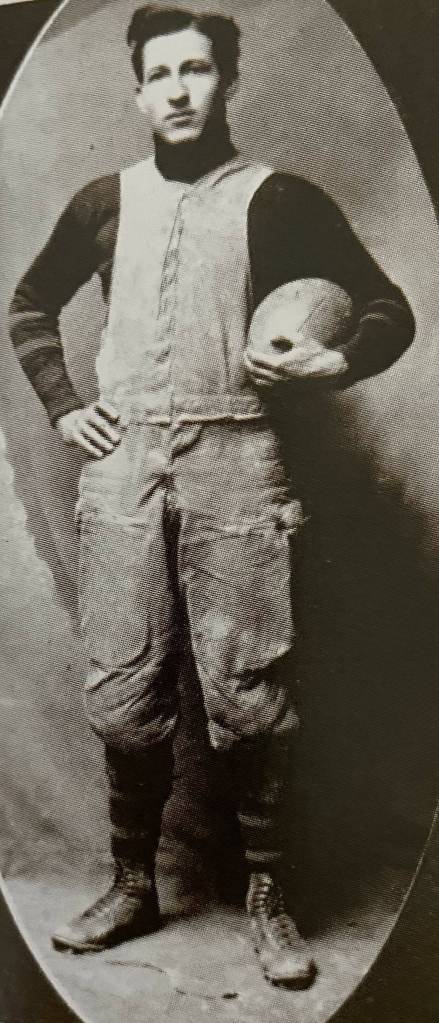
Of Irish, Cherokee and Black ancestry — mulatto, in the parlance of the day — Jim Phillips could have passed for white. But he was proud of being “mixed blood.” He said it made him “all American.” That was true in more ways than one. Hailed as “Big Chief” and “The Fairest Man in Football,” Phillips was a gridiron star at the Carlisle Indian Industrial School in Pennsylvania under Coach Glenn S. “Pop” Warner.
Raised in rural Pennsylvania, Jim Phillips received a Bachelor of Arts degree from Lincoln University in Chester County, Pennsylvania, and enrolled in Penn State’s Dickinson School of Law in 1900. He was recruited for Penn State’s football and track squads. However, while still studying at Dickinson, Phillips moved into the dormitory at nearby Carlisle “and started wearing the red and gold on Saturdays” at left tackle and left guard for the Indians. “How it came to be is lost to posterity,” Tom Benjey writes in his history of Carlisle Indian School immortals, “Doctors, Lawyers, Indian Chiefs.”
That Phillips was part Cherokee clearly filled the bill for Pop Warner, one of the sport’s great innovators, introducing single and double-wing formations. In Jim Phillips, he saw a player with enormous potential. Though 6-feet tall and 190 pounds — a big man in his day — Phillips was admonished by his coach to be more aggressive and not let his opponents “get the jump on him.” One day at practice, Warner pulled Phillips aside and barked, “Now get down there and show me how it should be done.” The coach took a stance opposite Phillips and said, “Let’s go!” Phillips charged so hard, Benjey writes, that he knocked Warner unconscious. When he came to, Pop said, “Now, that’s the way it’s done!”
Phillips emerged as one of Carlisle’s top gridders. And come spring, set a high jump record. He was also an eloquent ecumenical Christian, in demand as a guest speaker on and off campus on the merits of clean living and adherence to the Golden Rule.
LAW DEGREE in hand, Phillips enrolled in post-graduate studies at Northwestern University’s School of Law and became a bona fide star on Northwestern’s football team. But when the Chicago school played Carlisle on Thanksgiving Day 1903, the nimble lineman refused to play against his former teammates, who posted a 28-0 victory despite heavy snowfall.
“Big Jim” was named to sportswriter Walter Camp’s national all-star team at guard, married Ernestine Wilber, a lovely half-Menominee girl he met at Carlisle and headed West. Phillips coached at Whitworth College in Spokane for a year before tentatively launching a law practice in Seattle. He soon learned there was more money to be made here as a stonemason — his summer job during college — as Aberdeen rebounded from its “Black Friday” fire on Oct. 16, 1903.
Some say Jim Phillips was a Carlisle teammate of the legendary Jim Thorpe, a triple threat at halfback, place kicker and punter. But the multi-talented Oklahoman did not arrive at the Indian boarding school until the spring of 1907 when Phillips was a continent away, organizing a football team of Harbor-area amateurs and winning impromptu foot races while practicing law and politics.
It wasn’t until 1911 — after a stint in minor-league baseball — that Thorpe became a national sensation. It was Carlisle’s upset victory over top-ranked Harvard that year and 27-6 thrashing of Army at West Point a year later that elevated Thorpe and Pop Warner to gridiron immortality. Thorpe went on to win gold medals in the pentathlon and decathlon at the 1912 Stockholm summer Olympics. Phillips became friends with the three-time All-American at Carlisle reunions over the years
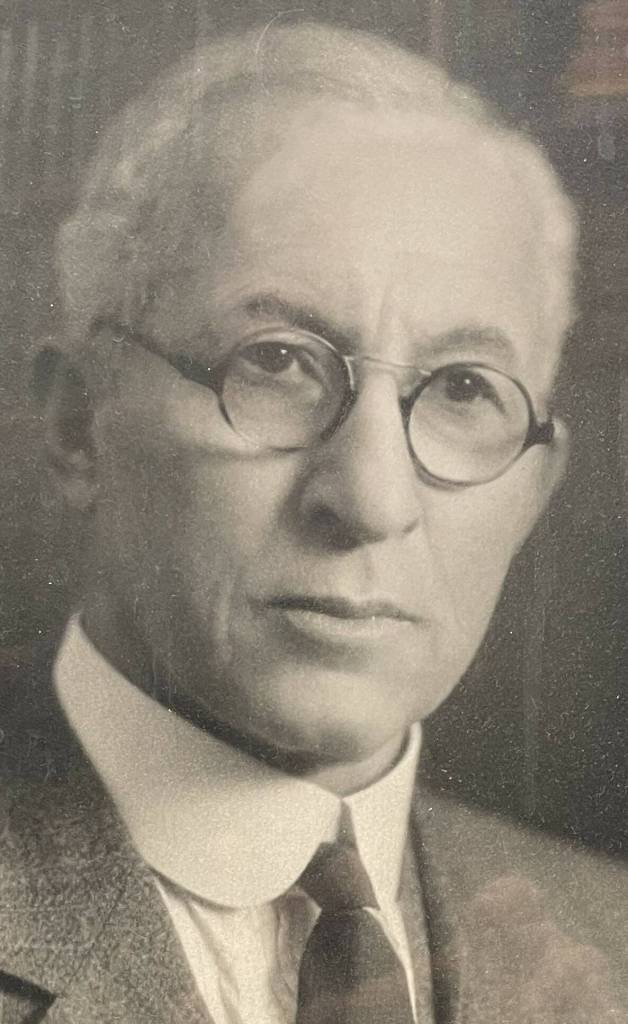
PHILLIPS QUICKLY became one of the Harbor’s most admired young men. Mayor Ed Benn — son of Aberdeen’s founder — appointed him police court judge and justice of the peace. In 1914, Phillips was a “Bull Moose” Progressive candidate for the state House of Representatives. He was elected mayor of Aberdeen the following year and served a two-year term.
Phillips ran for state Attorney General in 1920, polling 100,000 votes, and for Congress in 1922, as a Farmer-Labor Party candidate on both occasions, having “fearlessly taken his stand with the mass of the people in the great struggle between plutocracy and the producers,” as the State Labor Journal put it. Phillips served one term in the Washington House of Representatives from 1925-27 as a liberal Republican before his election to the Grays Harbor Superior Court bench in 1928.
His career as a trial lawyer was marked by painstaking preparation and compassion. “He would conscientiously defend and win acquittals for many who otherwise” might have faced long sentences at the State Penitentiary. “On the bench,” Van Syckle wrote, Judge Phillips was “equally compassionate — in one notable case refusing to allow foreclosure of a mortgage where the [homeowner] had faithfully met his payments and then fallen upon hard times during the Depression.” On another occasion, when an FBI agent was lurking outside his courtroom to deport a Finnish immigrant accused of being a subversive leftist, Judge Phillips promptly swore in the defendant as a U.S. citizen, convinced he was no threat to democracy.
In his 23 years on the bench, Judge Phillips gained a statewide reputation as an exemplar of integrity. He was also a tireless advocate for first-rate schools, emphasizing the community’s obligation to promote mental and physical strength and moral character among its youth.
His daughter Gladys — Jim Brown’s aunt and future law partner — was a trailblazing female attorney who went on to serve in the Legislature.
Judge Phillips’ death in 1959 was cause for mourning around the Northwest.
In 2008, the Washington state Supreme Court unveiled a montage of historic photos in the Temple of Justice in honor of the first Native American to serve as a judge in the court system of the state of Washington.
ALL OF THE ABOVE, especially the testimonials about integrity and community service, comes as no surprise to those of us who knew and admired James Marston Brown. He would be the first to quip that athletic talent skipped a generation, but in all other respects Jim lived up to his grandfather’s and aunt’s example as a guardian of their profession’s canons of ethics, as a public servant, and stalwart Christian, teaching Sunday School and spreading civility. Jim and his wife Coleen, a mainstay at the law firm, raised two fine sons, Bill and Peter.
A gifted musician, Brown was a trumpet and political science major at the University of Washington. He loved science and biology, too, which led to a year as a pre-med student at UC Riverside, envisioning a career as a surgeon. It was Aunt Gladys, a force of nature, who kept saying he should earn a law degree and join her practice. “Jim was conflicted,” says Coleen, whom he met in California. “But he kept getting a luring to attend law school, placing the decision in God’s hands.”
James Marston Brown graduated from Western State College of Law in Orange County, California, and returned home in 1979. His 47 years of service to the rule of law and betterment of his community do great credit to his family’s good name.
A memorial service is set for 1 p.m. Saturday, March 28, at Immanuel Baptist Church in Hoquiam, where Jim and Coleen’s son Bill is senior pastor.
John C. Hughes was chief historian for the Office of the Secretary of State for 17 years after retiring as editor and publisher of The Daily World in 2008.