Elma theater demolition project officially completed
Published 1:30 am Wednesday, March 11, 2026


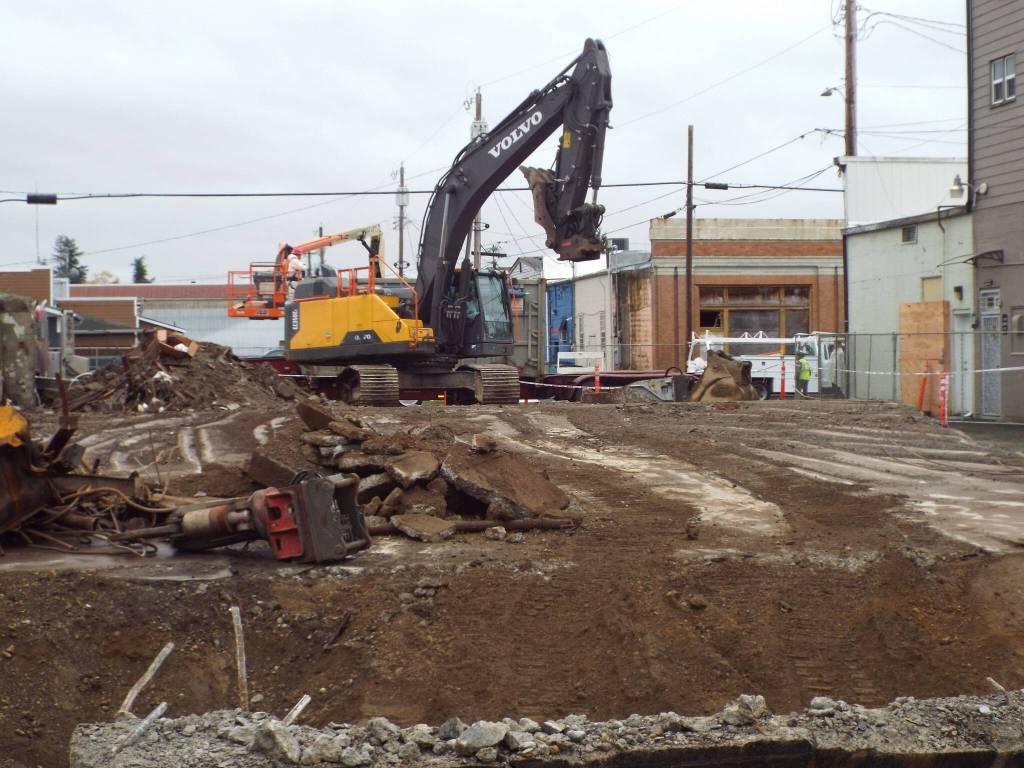



At the city of Elma City Council meeting held on March 2, the council approved the final acceptance of the Elma theater demolition project. With tax, the project had a final contract amount of $790,211, which came under the $900,000 that the city budgeted for.
Though the project award amount was $735,000, two change orders increased the cost. While the presence of an underground heating oil tank had been known, whether it contained oil hadn’t. Once the tank could be accessed, it was found to be filled with oil. The increased contract cost was associated with testing and disposing of the oil and the tank.
The demolition of the Elma theater received the go-ahead at the Sept. 15 city council meeting with the council approving a motion to “award the controlled demolition of the former Elma Theater Project to the lowest responsible bidder,” which was Rognlins Inc.
On Nov. 10, fences and detour signs blocked off 4th Street in preparation of demolition that began on Nov. 12 and took the next month to complete.
Rick Eaton, the director of public works for the city of Elma, inherited the project from his predecessor Jim Starks, when Eaton joined the city in 2023.
“The project was something that was high profile for the city of Elma,” Eaton said. “I know the council was really eager to get that thing down, and hopefully do something with that property in the future.”
At one point, Eaton had looked inside the building but didn’t go in because it was too dangerous. The theater had been vacant since 2013, and around 2018, the roof had collapsed. It was also still filled with items that hadn’t been removed, such as the seats.
“There wasn’t any saving that building,” he said. “We did explore some options to see if it was savable early on, because it would have been cool to get that to be a theater again. It’s been here for 100 years. That’s a pretty big chunk of Elma’s history that you will only be able to relive through photos.”
Eaton worked with Montrose Environmental Services, a consulting firm the city contracted with, to apply for a grant through the Washington State Department of Commerce Brownfield Revolving Loan Fund Program. This program “provides low interest loans to local governments, non-profits, tribes, ports, and private businesses undertaking clean-up of contaminated properties.”
However, this program also provides grants, one of which the city of Elma was awarded in 2024 — $500,000 — which Eaton said was the largest grant the Revolving Loan Fund program had awarded.
“This building was known that there was a whole heating oil tank down in the basement so that may or may not have played a role,” Eaton said.
Montrose Environmental Services helped the city draft the scope for what would be called the “Controlled Demolition of the Former Elma Theater” that was then put out for a competitive bid and awarded to Aberdeen-based Rognlins Inc.
As for the demolition, Eaton described it as a boring project.
“There was rumored to be a lot of cats and stuff in there,” he said. “When they started doing the demo, no cats, no rodents that were visible that we could see.”
Because of the asbestos-containing materials in the theater, Montrose Environmental Solutions coordinated the air monitoring during the demolition. This was a reason for water being sprayed as the machine operator tore down the building. Additionally, the rain also helped keep the dust to a minimum.
“We had to have monitors around the site to make sure none of that hazardous material made it out, and they did a really good job of keeping it [down],” Eaton said. “We didn’t have any positive tests.”
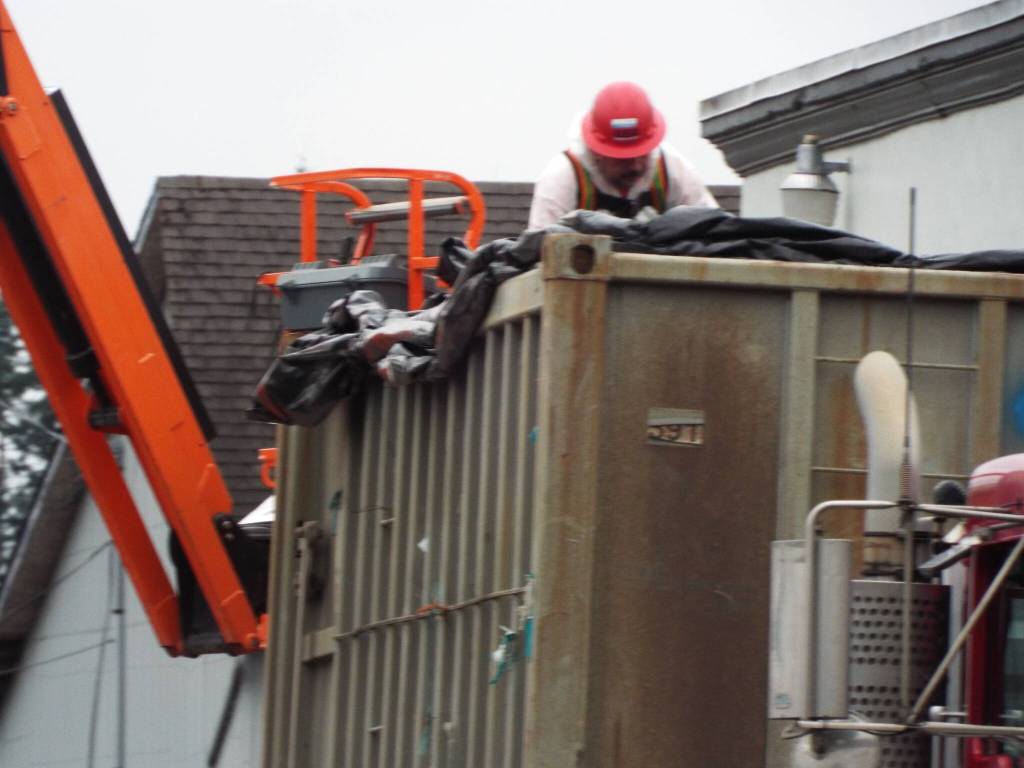
During the monthlong demolition, there was a regular sequence of trucks arriving empty and leaving full of debris. The containers were lined with heavy-duty plastic to further contain the hazardous material, which was sent to approved sites.
Rognlins subcontracted the demolition to the Dickson Company based in Tacoma, and Eaton said that “they did a really good job; they were very professional.”
Bonnie Lindsey, who lives next door, said there hadn’t been any problems during the demolition and she’s just glad that it’s gone. Before the demolition began, the city came and talked to her about the work.
When the heating oil tank was unearthed, Eaton determined that it was still full; the tank was sized to hold about 750 gallons.
“I don’t even think the previous ownership knew that the oil was in the tank,” he said.
Because there was some leakage into the surrounding soil, additional work was needed to remove the contaminated soil and test the oil.
Now, the theater’s former footprint is a gravel lot with concrete barricades and a fence marking the property line between Lindsey’s parcel and the lot; the city is currently exploring options for its future use.
The few times that Eaton went to observe the demolition, he would see residents watching too. Some would share memories of performing there or watching movies.
“And now that’s not a thing anymore,” he said.