Why don’t we read? Reading offers immeasurable life-long benefits
Published 1:30 am Friday, January 9, 2026



If you grew up in the pre-internet era in a region where inclement weather during the winter months was the norm like I did, in a one TV household like I did, perhaps reading for pleasure became a great way to keep yourself entertained or pass the time when going outside to play was not such a great idea.
When I was a kid, my teachers always required certain book purchases from the Weekly Reader (which sadly doesn’t exist as a print publication anymore), and my parents always indulged my additional wants. I read Dracula and Frankenstein and Sherlock Holmes, H.G. Wells, Arthur C. Clarke, and Isaac Asimov, Jules Verne and Ray Bradbury … all for fun. I still have some of those copies in my home library. Eventually I discovered comic books, which contrary to some opinions, counts as reading. Books became my friends.
Fast forward some decades later and I have become a very streaky reader, and sometimes a binge reader, and at other times I read nothing at all for pleasure for long stretches. However, I have to believe that my lifelong love of reading, and sometimes the idea of reading, has led to my profession as a writer and vocation as a published author.
Adult reading has declined significantly. Sadly, my annual average of eight books puts me smack in the middle of the pack. According to a recent YouGov study, a whopping 40% of Americans didn’t read any books last year, while 27% read one to four, 13% read five to nine, 19% read 10 or more, including 9% who read 10 to 19, 6% who read 20 to 49, and 4% who read 50 or more books.
In a Jan. 2 article for The Atlantic, Adam Kirsch wrote “If you read a book in 2025 — just one book — you belong to an endangered species. Like honeybees and red wolves, the population of American readers, Lector americanus, has been declining for decades. The most recent Survey of Public Participation in the Arts, from 2022, found that fewer than half of Americans had read a single book in the previous 12 months; only 38 percent had read a novel or short story. This decline is only getting steeper. Over the past decade, American students’ reading abilities have plummeted, and their reading habits have followed suit. In 2023, just 14 percent of 13-year-olds read for fun almost every day, down from 27 percent a decade earlier. A growing share of high-school and even college students struggle to read a book cover to cover.”
The benefits of reading are immeasurable. According to an article written by Lana Winter-Hébert for lifehack.org, reading helps with mental stimulation, stress reduction, memory, gaining knowledge, expanding vocabulary, analytical thinking skills, improved focus and concentration, better writing skills, tranquility and in many cases, it’s free.
So, why don’t we read? Simply put, there is too much competition for our entertainment time and dollar. And this isn’t the first time in media history this has happened. According to the 2009 documentary Pulp Fiction: The Golden Age of Storytelling, the mass market paperback, TV, and to a lesser extent movies and radio, killed the popular pulp magazines of the 1920s, ‘30s, ‘40s and ‘50s. Today, internet driven experiences such as social media and streaming video are driving reading rates down. Never mind the other things in our lives that compete for our attention and money, especially in the entertainment realm, such as video games, concerts, movies, sporting events, festivals, etc.
There is science behind the paralysis that happens when we’re searching for something to do or buy. It’s called “choice overload.” I can’t tell you how many nights I scroll movie posters or cover art on streaming service du jour trying to find something to watch as if I was wandering the aisles at Blockbuster on a Friday night.
The Decision Lab says, “Choice overload, also known as overchoice, choice paralysis, or the paradox of choice, describes how people get overwhelmed when they are presented with many options. While we tend to assume that more choice is a good thing, research has shown that, in many cases, we have a harder time choosing from a larger array of options.”
In my case, ultimately, with too many options, I simply choose to do nothing or go back to social media, which is even worse than nothing most of the time.
Comedian Jim Gaffigan often makes light of reading. “I don’t understand the people who don’t like TV. ‘I just prefer reading.’ Have you watched television? It’s way better, there’s pictures, there’s sound, and most importantly, no reading,” Gaffigan has said in his stand-up act. “Have you read a physical book lately? Not on a tablet or a laptop, an actual book. You feel like you’re Abe Lincoln. Ooh, it’s made of wood, I hope it doesn’t catch on fire. When does this have to be back at the museum?”
There’s a great exchange between Sheriff Hank Keough played by Brendon Gleason and Hector Cyr played by Oliver Platt in the 1999 movie Lake Placid.
Keough, “I never heard of a crocodile crossing an ocean.”
Cyr, “Well, they conceal information like that in books.”
Unfortunately, there is a stigma when it comes to book reading. In a 2025 article for BookOrators, Suhani Agrawal wrote, “People oftentimes take reading as an anti-social activity, and are put off by the idea of sitting and reading for hours on end. It’s generally much easier and significantly ‘cooler’ to watch the movie or TV show adaptation of the book instead. This situation is worsened by people often stereotyping students in high school who choose to read in their spare time as ‘nerds.’ Through using this as a derogatory term, they propel a stigma around books, and actively discourage young people from reading.”
You do have to make a conscious decision to pick up a book (or Kindle or iPad) and settle in some distraction-free place to read. Those who do read books can be a bit quirky about it. Perhaps you read in bed, which is where I usually choose to, or perhaps you have a special spot in your house or apartment, a “book nook” if you will. Some still read on public transit or on airplanes or in coffee shops or bookstores or libraries. Our editorial assistant Karen Barkstrom reads at her desk during her 30-minute lunch almost every day.
When it comes to access to books and other reading material (despite continued book banning efforts), there really is no excuse. Public libraries are free. Free. Shamble into your local branch and sign up for a library card, it takes mere minutes. Fortunately (or unfortunately if you suffer from choice overload), the choices are almost as endless as the genres. Books, magazines, newspapers, comic books, graphic novels — mystery, thriller, fantasy, science fiction, horror, romance, paranormal, history, biography, memoir … the list goes on. There are literally books for everything. Check out The Daily World’s “Book Nook” each week to learn about author events, writing and book groups, and storytime for for kiddos.
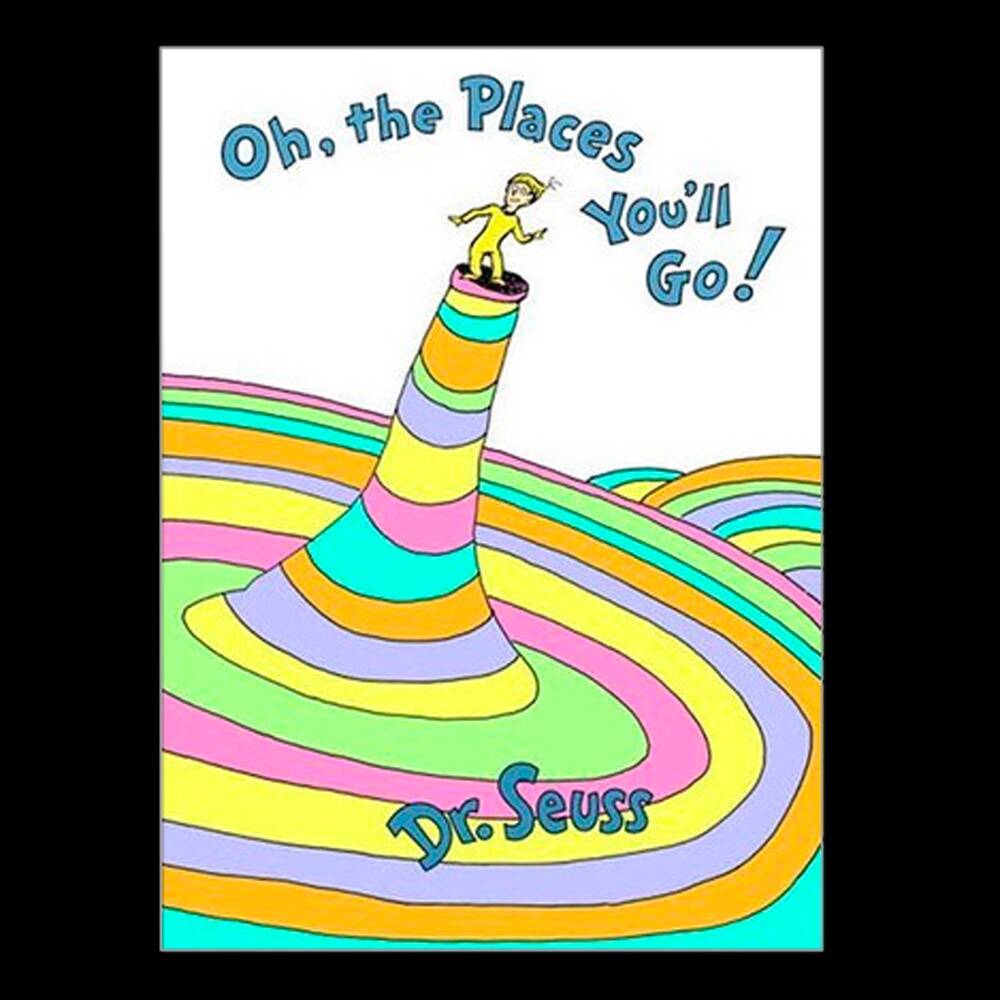
Stephen King describes books as “a uniquely portable magic.” While I don’t disagree with that sentiment, perhaps Dr. Seuss wrote it best.
“Oh, the places you’ll go!”