Quinault Chief Hoqueem: The unknown father of Hoquiam?
Published 1:30 am Friday, November 7, 2025


Dear Reader: There are many Aberdeens — at least 14 around the world. But there’s only one Hoquiam. That said, how Hoquiam got its unique name is now open to debate. And if history has slighted an early Quinault chief, I’ll try to make amends.
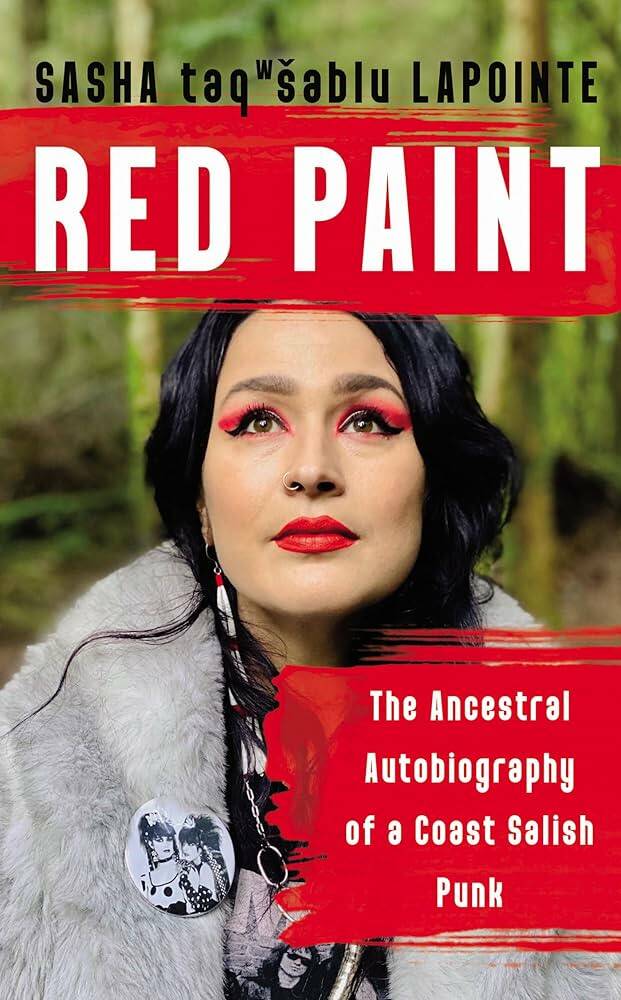
Today’s story begins with Red Paint, Sasha LaPointe’s award-winning 2022 “ancestral autobiography of a Coast Salish punk.” LaPointe’s ancestors are Upper Skagit, Nooksack, Chinook and Quinault, with generations of communal PTSD from broken promises and broken hearts. Sasha joined Seattle’s punk rock underground for catharsis and explored her indigenous identity in pursuit of healing. This multi-talented young woman writes with powerful originality.
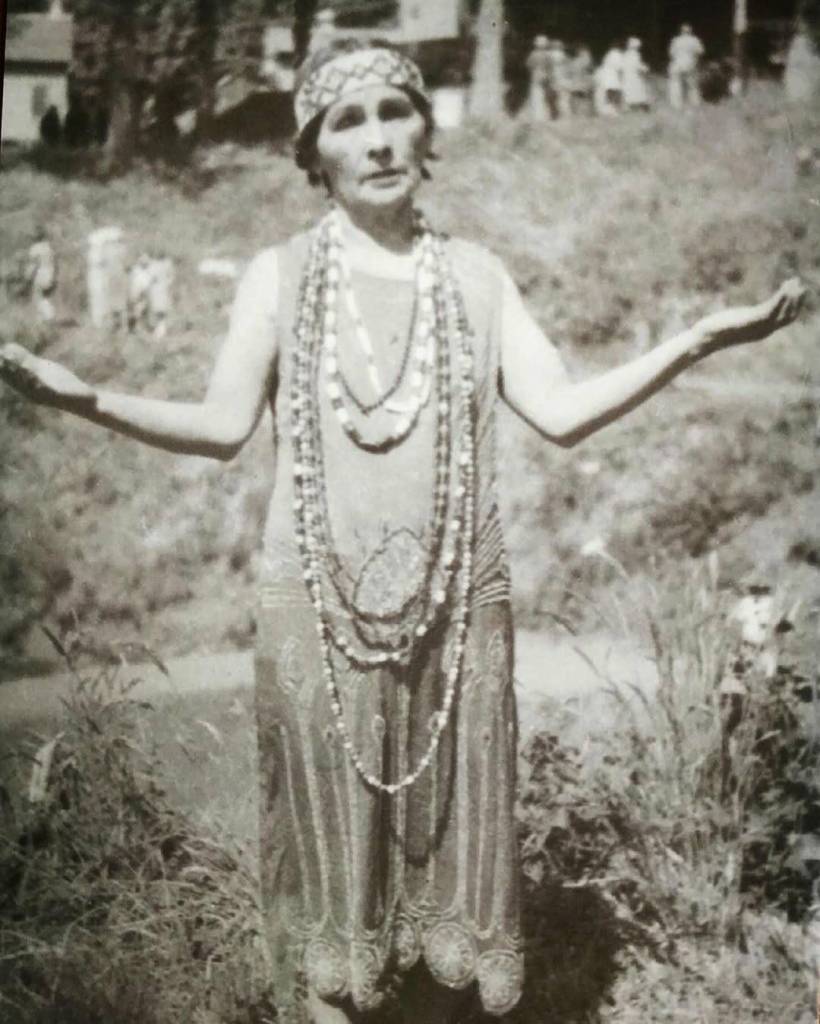
What took me by surprise is something Sasha says about her great-great-great-grandmother, Myrtle Johnson Woodcock. Myrtle was an influential member of the Chinook Tribal Council. She spoke Chinook and wrote wonderful poetry. Though she died in 1973, she can be heard speaking Chinook on YouTube videos.
Sasha writes that Myrtle was the granddaughter of Chief Uhlahnee of the Chinook band near Celilo Falls and “the great-granddaughter of Chief Hoqueem” of the Quinaults. To celebrate Myrtle’s birth in 1889, Chief Hoqueem reportedly came ashore at Oysterville “in a 40-foot canoe, its high prow carved into a massive wolf’s head.” Other chiefs arrived as well, Sasha relates. The settlers called Myrtle “The Last Indian Princess” of Pacific County.
In my 60 years of writing about the Quinaults, this was the first I’d heard of a Chief Hoqueem. So, I set out to discover whether he was a chief whom history has largely ignored—a real person, or an oral history legend.
I found something even more surprising:
Myrtle Johnson Woodcock’s granddaughter told the weekly Chinook Observer in 2019 that Hoquiam’s name derives from Chief Hoqueem — a claim that, if true, rewrites Hoquiam history, as well as Quinault Indian Nation history.
DIGGING DEEPER, I found a 1967 profile of Woodcock and her ancestors in The Sou’wester, the Pacific County Historical Society’s excellent magazine. That story also cited Chief Hoqueem as the source of Hoquiam’s name. No earlier, documented source was cited for this claim, which contradicts reputable research dating to the 1890s. (For the record, the 1967 story also says Chief Uhlahnee was Woodcock’s great-grandfather.)
Ho-qui-umpts, Northwest historians have always maintained, is what the band of Indians at present-day Hoquiam called the place where they fished, camped, and gathered wood. Ho-qui-umpts meant “hungry for wood,” white settlers were told in 1857. The explanation was that driftwood accumulated along the shoreline at the river’s mouth. Ten years later, when the settlers applied for a post office, they Anglicized the guttural Indian phrase and spelled it “Hoquiam.”
In 1990, Hoquiam’s centennial year, I discovered a 1907 newspaper article that amplified how the city got its name: Ruth Karr McKee, the historian daughter of Hoquiam pioneers, wrote in the Grays Harbor Washingtonian that the Indians told her father the riverbanks were originally covered with groves of cedars. But “for some reason these cedars had died, and bereft of both bark and sapwood, stood white and ghostly like the masts of some phantom fleet.” And “in the days of long ago before the white man came to these shores,” the Indians paddling past the trees “were impressed by this array of silent sentinels along the shore. ‘Hoquiamts!’ they cried, for “it seemed that the trees must have died of hunger. So, they named it the ‘River of the Hungry Woods.’”
In 1986, Brian Atwater, a U.S. Geological Survey geologist, had discovered a “ghost forest” along the Copalis River — evidence of the mega-tsunami generated by the Cascadia Subduction Zone earthquake in 1700, recorded as far away as Japan. Mrs. McKee’s 1907 article surfaced as Indian oral-history evidence that all along the Northwest coast the land suddenly sank as tectonic plates collided, allowing salt water to kill trees and other vegetation.
BUT WHAT TO MAKE of Chief Hoqueem? I know all about Chief Kape, a venerable Quinault whom James G. Swan met during his three years at Shoalwater Bay during the 1850s. At present-day Cosmopolis in 1855, Kape and the Quinaults’ “Head Chief,” Tah-ho-lah, attended the treaty council with Gov. Isaac Stevens. Both chiefs signed the final treaty for the Quinault — Tah-ho-lah’s mark first and foremost. There’s no mention of Hoqueem in accounts of the treaty talks. Nor is he to be found in Land of Trees, a 200-year chronology of Harbor-area news events compiled by Larry Workman, who recently retired as an editor, photographer and historian with the Quinault Nation.
Workman documented other Quinault chiefs and sub-chiefs, including the second Tah-ho-lah, grandfather of James “Jug” Jackson, the visionary tribal president of the 1960s. But Workman told me that Larry Ralston, the Quinault Nation’s former treasurer, and Justine James Jr., the tribe’s cultural resource specialist, had heard of Hoqueem.
Ralston says that, back in the day, tribal elders told him Hoqueem absolutely was a real person — likely quite elderly in 1889 when Myrtle Johnson Woodcock was born, and perhaps a chief long before the original Tah-ho-lah. Ralston believes it’s quite plausible that the settlers took the chief’s name for their new town.
The “Hungry for wood” Ho-qui-umpts story might also have historic validity, he suggests, because the Indian language — often funneled into Chinook Jargon — could be mis-interpreted by the whites. Other Indian words derivative of “Ho” — as in Hoh and Hoko — refer to significant sites along the Northwest coast, Ralston says. So “Ho-quiam” might also add up.
One thing is for sure: Hoquiam was “a very important place,” a hub of tribal fisheries, trade and potlatches, with Indian villages on both sides of the river, according to decades of interviews with Quinaults and elders from other coastal tribes.
Justine James has heard the Hoqueem story for some time, largely through Pacific County Historical Society publications and other articles. In one he discovered, Myrtle Johnson Woodcock noted that her great-grandfather’s name, more accurately, was “Hoquiano.” Doing the generational math, James also concludes that if Chief Uhlahnee, the Chinook head man, was alive to celebrate Myrtle’s birth in 1889, he likely was even older than Hoqueem.
What all this proves is that history is not absolute.
If you know more about “Chief Hoqueem,” please email me at editorworld@comcast.net. We owe it to his legacy.
John C. Hughes was chief historian for the Office of the Secretary of State for 17 years after retiring as editor and publisher of The Daily World in 2008.