The disaster everyone knows about — the one we should see coming
Published 1:30 am Monday, June 22, 2026
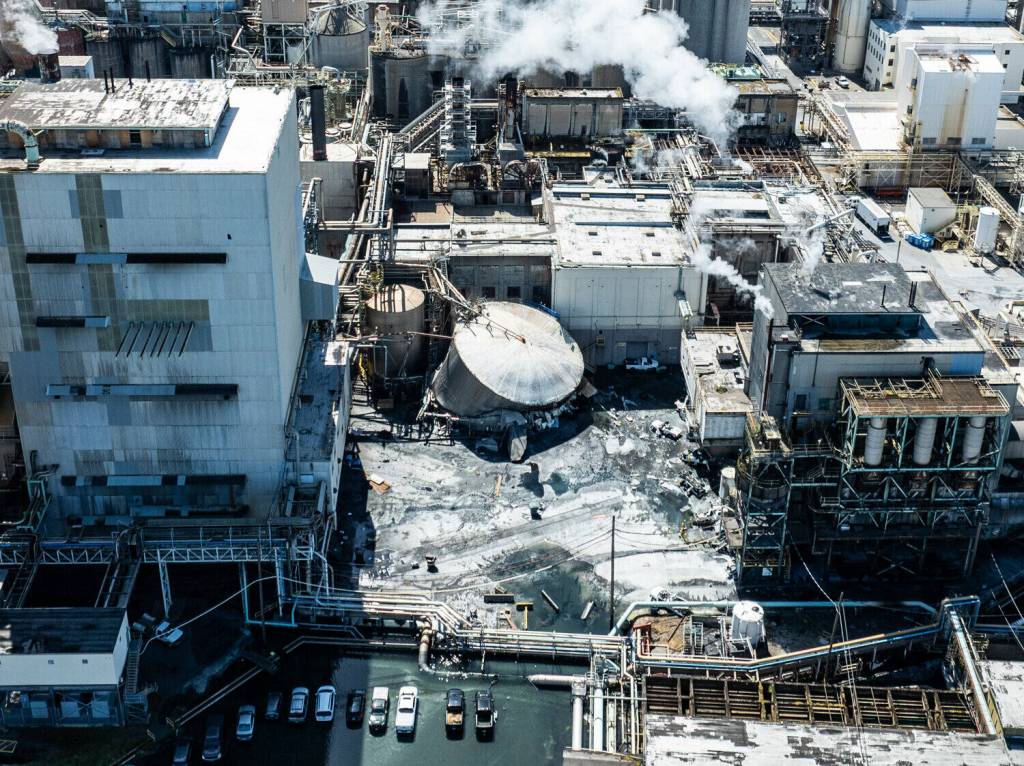
What happened on May 26, 2026, is horrible.
Eleven people died in Longview.
That sentence should stop all of us for a moment. Eleven workers left for work and never came home after a catastrophic failure at the Nippon Dynawave paper mill.
It is now being described as one of the deadliest industrial accidents in modern Washington history. Investigators are still determining exactly what happened, but one fact has already emerged: the tank that failed was not subject to routine state or federal inspection requirements.
That revelation has prompted an important statewide conversation about industrial safety, aging infrastructure and regulatory blind spots.
But there is another conversation we should be having. Ninety miles away, in Cosmopolis, sits a closed paper mill that regulators have spent years warning about.
This is not a hypothetical risk.
State and federal agencies have documented deteriorating tanks, active chemical leaks, corroded infrastructure and the possibility of what the Environmental Protection Agency has described as a potential “catastrophic release.”
More than 800,000 gallons of corrosive chemicals remain on site, while regulators report that some tanks, pipes and valves have deteriorated to the point that new leaks can form simply by touching them.
The facility sits right on the Chehalis River.
It is connected to a watershed that ultimately feeds Grays Harbor and it exists within communities that have limited resources to respond if something goes terribly wrong. The part that keeps me awake at night is not believing a disaster is inevitable but knowing that we have fully grappled with what a disaster would look like if it occurred.
If this happens it’ll be my fire department, my brothers and sisters, who would be first in risking their lives.
As a firefighter, I have spent my career responding to emergencies, including multiple calls to the Cosmopolis mill itself. I know the facility. I know its size. I know the challenges it presents to responders. As a member of the Washington State Emergency Management Council and someone who serves on committees responsible for protecting the Chehalis Basin, I view this issue through multiple lenses.
What worries me is not that we know there are risks. What worries me is that we know there are risks, yet there appears to be no sense of urgency proportionate to the consequences should something go wrong.
The Longview tragedy reminded us that catastrophic failures do happen. The question before us now is whether we are willing to learn from that lesson while we still have the opportunity. What concerns me is not simply the condition of the facility. It is the possibility that responsibility has become fragmented.
The Longview tragedy exposed a regulatory gap.
Cosmopolis may be exposing a governance gap. The greatest risk isn’t that nobody knows about the problem. The greatest risk is everyone knows about the problem and assumes someone else is taking care of it.
The EPA is involved. The Department of Ecology is involved. Local governments are involved. Property owners are involved.
Yet for the public, it remains unclear who ultimately owns the responsibility for ensuring this risk is reduced before it becomes a crisis.
One of the oldest lessons in emergency management is that when everyone thinks someone else is responsible, nobody is truly responsible. That doesn’t mean good people aren’t working on the issue. It doesn’t mean regulators aren’t paying attention. It doesn’t mean local officials don’t care. It means that diffuse responsibility can create dangerous blind spots.
And when the stakes involve aging infrastructure, corrosive chemicals, a major river system and nearby communities, blind spots are exactly what we cannot afford.
We know there are risks. We know chemicals remain on site. We know infrastructure continues to deteriorate. We know regulators have issued warnings, penalties and enforcement actions. What I do not know is whether anyone has publicly answered the questions communities deserve to hear answered. If a major release occurred tomorrow, who is in charge? What resources would respond? How quickly could they arrive? What would happen to nearby neighborhoods? What would happen to the Chehalis River? What would happen to Grays Harbor? And perhaps most importantly, what is being done right now to reduce the risk before an emergency occurs?
These are not anti-industry questions. They are not anti-business questions. In fact, they are exactly the questions responsible industries ask themselves every day.
The lesson from Longview should not be that industrial facilities are inherently dangerous. The lesson should be that risks ignored eventually become risks realized. Washington has spent the last two weeks asking how an industrial disaster could happen in Longview. We should spend at least some time asking what we are doing right now to prevent one in Cosmopolis.
Not after another headline.
Not after another emergency declaration.
Not after another environmental disaster.
Now.
Because preparedness is always cheaper than response. Prevention is always better than recovery. And the most expensive disaster is often the one everyone saw coming but convinced themselves someone else was handling.
Wayne Fournier is a firefighter, Thurston County commissioner and former mayor who has spent more than three decades working in public safety. His column appears in The Chronicle twice each month.