Art Fletcher: A breakthrough is a terrible thing to waste
Published 1:30 am Friday, June 19, 2026
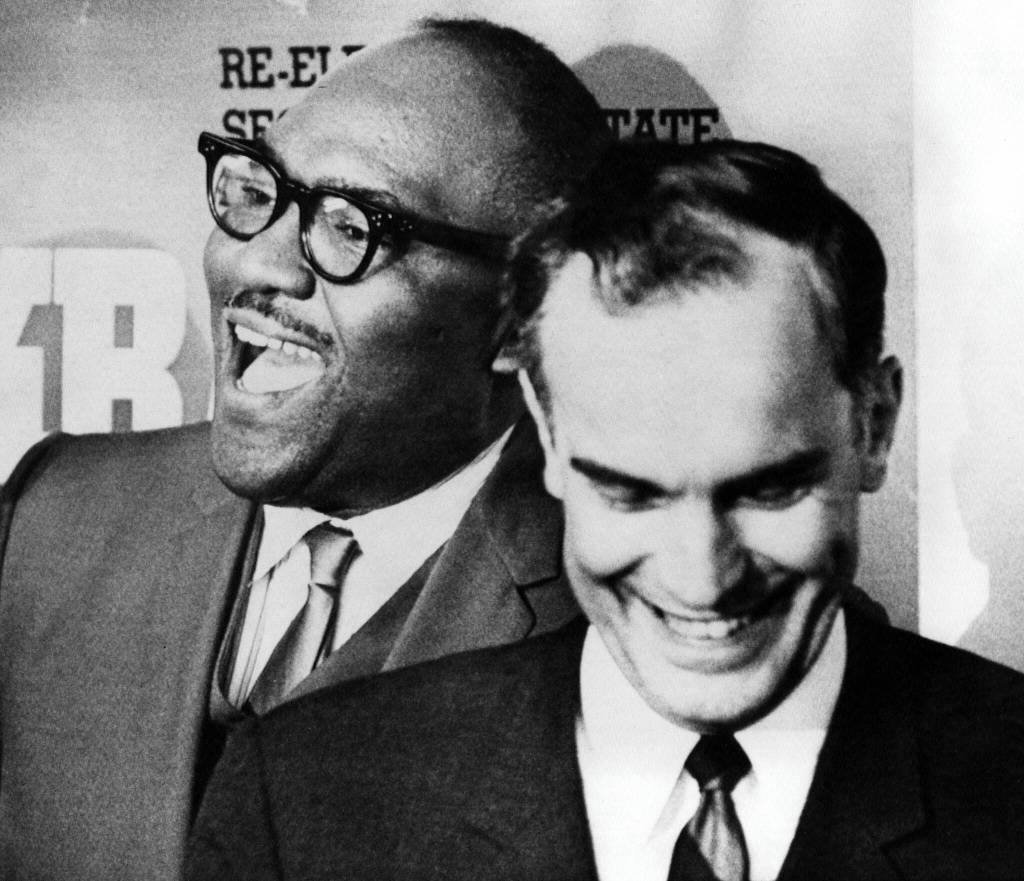
DEAR READER: When Arthur Fletcher announced his candidacy for lieutenant governor on May 3, 1968, his race made him such an electoral novelty that practically every newspaper in the state used the same identifier. He was “the Negro Pasco city councilman.”
History now remembers him as a civil rights icon.
His narrow loss here was America’s gain. Fletcher went on to spearhead landmark Affirmative Action efforts for the Nixon Administration, served two other presidents and headed the United Negro College Fund, where he helped craft its eloquent slogan: “A mind is a terrible thing to waste.”
Dan Evans, a three-term governor and U.S. Senator, believed Fletcher should have become our state’s first Black governor.
IN THE SPACE of one campaign stop in the fall of 1968 you could meet three different Art Fletchers: the arm-waving Baptist preacher, the spellbinding storyteller, and the charismatic politician who called himself “a practical militant.” He was “reassuringly articulate,” an Aberdeen Rotarian told me, a phrase that spoke volumes about stereotypes and the color line.
At 6-4, 250 pounds, Fletcher sometimes seemed even larger than life.
One of the most talented high school football players in Kansas history, Fletcher joined the Army during World War II. He was attached to the celebrated Red Ball Express, the 6,000-vehicle convoy tasked with ensuring General Patton’s Third Army didn’t grind to a halt for lack of supplies as it advanced on Germany.
Fletcher was wounded as he walked down a dark street in a newly overrun village. He endured several surgeries and months of recuperation.
After his discharge, he hoped to play football at a “big-time” university like Kansas or Oklahoma. But both barred Blacks from their squads. Fletcher finally landed at Topeka’s Washburn University, founded in 1865 by Congregational churchmen. In his sophomore year, he emerged as a powerful tailback, “harder to stop than a Santa Fe Streamliner.” Fletcher was also excelling in the classroom and emerging as a statewide political activist with the College Republicans.
FLETCHER WAS jubilant when the Baltimore Colts called. Unfortunately, the 1950 incarnation of Baltimore’s NFL team was a far cry from the legendary franchise that revived the Colts name a few years later. The team Fletcher joined lasted only one season before folding. His dream of an NFL career ended, he persevered through a succession of menial work before landing a teaching job in California.
In 1965, Fletcher arrived in the Tri-Cities, where he became the first director of a jobs program funded in part by the Johnson Administration’s War on Poverty.
Hundreds of Blacks had been recruited to Richland, Kennewick and Pasco during World War II to construct the Hanford facilities. Fletcher’s ambitious agenda for Higher Horizons included a skills bank, on-the-job training programs and a neighborhood watch committee that combined crime prevention with mentorship programs for jobless youth.
Members of the John Birch Society attacked the project as communistic.
When he ran for the Pasco City Council in 1967, Fletcher faced death threats. Fortunately, his campaign boasted influential friends, notably Gov. Evans and Secretary of State Lud Kramer, two of the West’s leading civil rights Republicans.
At Kramer’s urging, the governor visited Pasco that year to learn more about a Self-Help Cooperative Fletcher had founded. “It was impossible not to be impressed with Art Fletcher,” Evans remembered. “Here was this imposing African American man who radiated charisma and intelligence and preached the importance of a ‘hand-up, not a handout.’ He was an apostle of the power of education to build self-esteem and change lives.”
Come November, Fletcher was elected Pasco’s first Black councilman, capturing 59 percent of the vote.
WITH EVANS and Kramer facing re-election in 1968, two energetic young Republicans — future Secretary of State Sam Reed and future King County Prosecutor Chris Bayley — mobilized college students for the campaign. Before long, Reed remembers, “Action for Washington” had attracted 2,500 bright young activists, including two political prodigies from Hoquiam, UW students Jack Durney and Stuart Elway.
Action for Washington fielded the first, and to date only, four-candidate statewide ticket in Washington history. Evans and Kramer already had their hats in the ring. When Slade Gorton, Evans’ point man in the Legislature, resolved to run for attorney general, all they needed was a candidate for lieutenant governor.
Sam Reed saw Fletcher as their man. If they were going to stand a chance of defeating the entrenched incumbent, 58-year-old Democrat John Cherberg, why not make a bold stroke? If anyone had the moxie to break the color barrier in Washington electoral politics, Reed figured, “it was Art. It took me a while to convince him I was serious. … Then, I got Dan and Lud to talk to him. That did it.” By Labor Day Fletcher had campaigned in 23 of the state’s 39 counties. I spent a day with him on the Harbor, and came away thinking he had a real chance.
THAT NOVEMBER, Evans and Kramer were handily re-elected; Gorton eked out a 5,300-vote victory for attorney general, and Fletcher fell 48,000 votes short of becoming Washington’s first Black statewide elected official. Cherberg thumped Fletcher here and in Pierce County, another Democratic stronghold. Tellingly, the incumbent Democrat even carried staunchly Republican Lewis County. Fletcher ran close races in King County, the state’s most populous, and Spokane County, Eastern Washington’s population center.
For Fletcher, carrying conservative Yakima County by 184 votes amounted to a moral victory. But the damage inflicted by a mass mailing of a Yakima weekly newspaper backed by the John Birch Society may have cost him the election.
The Yakima Eagle’s front page featured a photo of Fletcher mowing his lawn. Not only was he big and black, his T-shirt was soaked with sweat. “Meet Your New Governor,” the caption said. The paper was distributed at high school and college football games in the days before the General Election. An estimated 50,000 copies hit the streets of Spokane County. “I ran into it wherever I went,” Fletcher said. So did Gorton. “It was appalling,” the future U.S. Senator said.
Race and anxiety about race clearly were also factors in the King County vote, Evans said. “An elderly Republican woman said to me, ‘Governor, I just couldn’t vote for Mr. Fletcher because I was afraid some radical Negro group would assassinate you to make him governor!’”
DURING THE GOP Convention in Miami, Nixon and Fletcher had developed a genuine rapport. The president-elect and George P. Shultz, the incoming Secretary of Labor, settled on Fletcher for Assistant Secretary of Labor. Shultz was an Affirmative Action supporter, much to the disdain of Strom Thurmond, South Carolina’s segregationist senator, and other right-wingers.
In the months to come, Fletcher repeatedly placed himself in risky situations to advance minority hiring in the construction trades. His closest call came in Chicago in the fall of 1969, when he arrived for hearings on implementation of Affirmative Action in the local building trades. Upwards of 3,000 angry white construction workers blocked the entrance to the Federal Building, “pummeling a Black motorist’s car” and menacing a cluster of brave white women lobbying for union and job-site integration.
Friends feared Fletcher wouldn’t get out of Chicago alive. When the shouting finally stopped — inside at least — contractors, unions and community groups agreed “to a voluntary plan to admit as many as 4,000 more blacks into the construction unions by the end of 1971.”
By 1971, however, it was abundantly clear that voluntary Affirmative Action plans weren’t working. And mandatory plans were now “in variance with the administration’s goals at this point in time” — chief among them securing the re-election of the president. Fletcher was now expendable. They created a post for him at the United Nations working for Ambassador George H.W. Bush. The odd couple pair became close friends.
Fletcher went on to become executive director of the United Negro College Fund. And in 1976, President Ford appointed him as his deputy assistant for urban affairs. In 1989, Fletcher was appointed chairman of the U.S. Civil Rights Commission by President Bush, serving in that post through 1993.
Two heart attacks and bypass surgery slowed the old civil rights warrior.
Arthur Allen Fletcher died in Washington, D.C., in 2005 at the age of 80. His legacy as one of the 20th century’s civil rights pioneers lives on. In a book he wrote in 1974 to express his frustration over backsliding in the war against discrimination, Fletcher said he wasn’t defeated, just seeking new ways “to carry forward the quest for justice and dignity.”
John C. Hughes was chief historian for the Office of the Secretary of State for 17 years after retiring as editor and publisher of The Daily World in 2008.