Why shopping local matters this holiday season
Published 1:30 am Friday, October 31, 2025

Editor’s note: Each Saturday for the next eight weeks The Daily World’s Content Studio is introducing a series of articles focusing on the importance of keeping holiday dollars in the local economy. Next week will highlight several local business owners who strive to make Grays Harbor thrive.
As the major holidays fast approach, shopping local is critical to economic vitality in Grays Harbor. At a time with what could be called economic uncertainty, perhaps this is the best and most important moment to consider shopping locally if not already doing so.
Creating what is termed as the “local multiplier effect” impacts its community exponentially. The effect is defined as the occurrence where financial resources expended within a specific geographical area circulate repeatedly, thereby generating additional economic activity and wealth. According to Sustainability Directory, the local multiplier effect can be broken down into three specific beneficial impacts to the community.
The initial injection of cash into the local economy is a direct impact. This revenue is then used by the business owner to cover immediate operational costs like paying employees, purchasing supplies, paying rent and utilities. This leads to the indirect impact of local spending.
Indirect impact is the second wave of economic activity. Any local purchases of the business owner using the original injection of revenue creates a chain reaction, supporting a network of interconnected local enterprises, thus restarting the process again.
Perhaps the largest and most important effect of buying locally is what is called the induced impact. Induced impact is the giant ripple effect resulting from the employees of the local businesses spending their wages in the communities in which they work. Buying groceries, going out to eat and supporting other local businesses makes the process keep repeating itself.
The local multiplier effect is a cascading process where the initial purchase is re-spent multiple times within the community, amplifying its economic benefit at each stage.
When comparing the multiplier effect between local businesses and national chains or online giants the difference can be immense for a community. A study performed by Civic Economics found that, on average, for every $100 spent at a local independent business, around $68 is recirculated locally, compared to less than $14 from purchases at chain stores. Why the disparity? Local businesses are far more likely to use other local suppliers, service providers and banks. Further, their profits are disproportionately more likely to be spent locally by the owners who live in the community, kick-starting another multiplier effect.
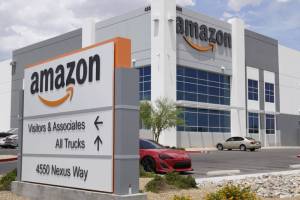
Revenue collected by national chains or online stores is, in reality, extracting it almost immediately from the local community to pay for corporate overhead, out of state suppliers or even shareholders.
Renowned economist and author, Michael Shuman states: “Local businesses spend more of their money locally, and with those local relationships, what happens is that money stays in the economy. And you get the multiplier effect, which generates more income, wealth and jobs.”