Q&A: Talking ‘trash’ with Cedar Monroe
Published 1:30 am Saturday, October 11, 2025
Editor’s note: This interview first appeared in Path Finders, an email newsletter from the Daily Yonder. Each week, Path Finders features a Q&A with a rural thinker, creator or doer.
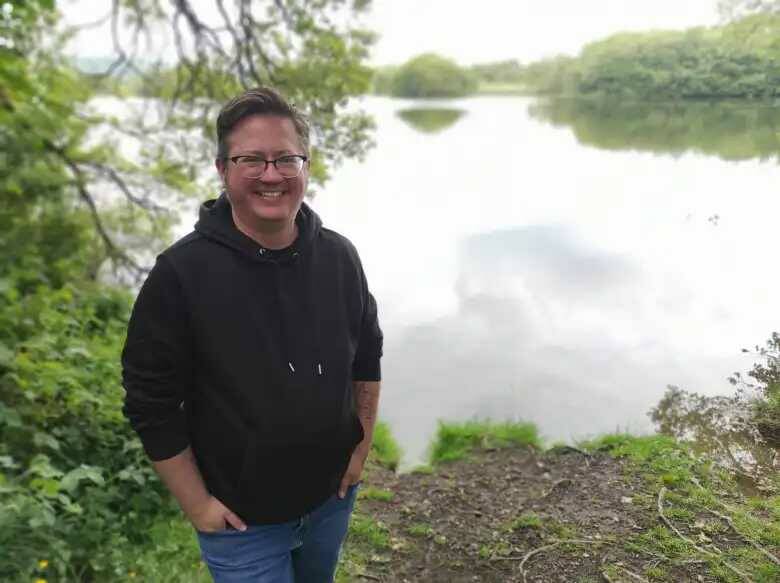
Cedar Monroe grew up in rural Grays Harbor County. For about a decade, he worked as an activist and interfaith chaplain in Grays Harbor, facilitating street and prison ministry for some of the county’s most underserved residents.
In 2013, he co-founded faith-based activism movement Chaplains on the Harbor, a group he has since left that continues to serve marginalized folks in Grays Harbor. In 2024, he published his book Trash: A Poor White Journey, which delves into white supremacist narratives around poverty in America. Now, he is earning a PhD through the University College Cork, studying nature-based religion as a motivator for change.
Betsy Froiland, The Daily Yonder: Can you talk a little bit about the history of Grays Harbor County?
Cedar Monroe: After the Puget Sound War, the U.S. government seized the majority of land in Grays Harbor, at that time from Indigenous people. Then, the land was sold for six dollars an acre to Weyerhaeuser [logging company] in the very early 20th century. It was very much a timber economy, very much an extractive economy that was the basis for jobs there for almost a century. Then, the timber industry in the region started declining in the 70s and 80s. Coming out of that, I grew up in the 90s, when the industry was imploding: there was more and more unemployment, more and more poverty. And then really, really high rates of homelessness. It’s a majority white community, but it also has a significant presence of Indigenous people. Quinault Indian Nation is just north, and then Shoalwater Bay and Chehalis on either side. And so a significant number of homeless people are also Indigenous in the region.
DY: You mentioned that Grays Harbor is a predominantly white county. In Trash, you discuss how white supremacist narratives hurt everyone, including – particularly poor – white people. What were you observing in Grays Harbor that brought you to that conclusion?
CM: One thing I noticed in Grays Harbor was that there were all of these systems that were designed to keep people in their place. And all of these messagings that were telling people that they were inadequate – that their poverty was their fault. That they were just too lazy, too stupid, too uneducated to make it. And this is also very much coming out of a lot of religious messaging as well. A lot of local religious groups who were providing charity or support saw people as problems and suffering from a crisis of their own making. You’re poor because you don’t love Jesus enough.
This is where my analysis of white supremacy comes in. There is this assumption that if you are white, you should make it. Embedded within white supremacy is a blaming of poor white people for their own poverty because they’re failed white people. White supremacy teaches the superiority of whiteness. And here they are, people who can’t make it. And so all of these messages of blame was something that really kind of struck me more than anything else. Because if you step back, it’s so clear that this is a manufactured crisis. But whole populations, whole cities of people are being told that this is their fault – that it’s their failure. And so I think I wrote the book in large part to reverse that discussion. And to challenge that dominant narrative. I think J.D. Vance’s book, Hillbilly Elegy, is very much a look at poor white communities as failed communities. And they’re failing because they’re lazy and they don’t go to work on time and they don’t have a good work ethic and they are prone to addiction and all of these things. And I think it’s – in Vance’s campy kind of way – a message of blame. And I wanted to present a different narrative.
DY: You bring up J.D. Vance – Trash was published in March of 2024, before the re-election of Donald Trump that fall. Now, with Trump in office again, and white supremacy and Christian nationalism continuing to surge across the country, do you see what’s happening in America as more of the same thing that you wrote about in your book? Or is it different this time?
CM: I think we’re seeing not only the living out – or the result – of this idea that poor people are to blame for their own poverty, but also measures that are going to immeasurably increase people’s suffering. There’s such a tremendous amount of suffering and unnecessary death, right, that comes with this enforced poverty, this withholding of resources from poor communities, this theft of resources from poor communities. And I think the Trump administration has shown that it’s not only going to continue, but accelerate that process. It’s going to continue to destroy anything that’s left of any kind of social safety nets, any kind of social programs, any kind of support systems that are left – which is very, very little in the American system. We have this narrative in the United States that, you know, you need to pull yourself up by your own bootstraps – you need to just work hard and not be lazy and everything will be fine. But that isn’t true for an increasing majority of Americans. There was just a study that said that 60% of Americans struggle to meet their basic needs. So we’re seeing this increased concentration of resources into the hands of fewer and fewer people. And at the same time, this cutting off any kind of whatever little bits of social services were left for people.
In Grays Harbor, people’s demands were really clear. Their demands were for housing and for medical care and for treatment centers and their demands for their basic needs to be met. And there’s no reason why our society can’t provide those things. There’s no reason why our tax dollars can’t provide these things. There’s no reason why the richest country in the world can’t provide for its people. There are many alarming things about the Trump administration, but one of the things that’s broken my heart the most is seeing the rollback of access to Medicaid and access to food stamps as the last safety nets for people who are already completely on the edge.
DY: You brought up how Christianity has been used in these blaming narratives – in your street and prison ministry, did you see your work as trying to undo those logics?
CM: Yes, absolutely. I think that was very much my goal. I did interfaith work, so I wasn’t particularly interested in telling people what they should or shouldn’t believe. And there’s a very wide range of religious beliefs in Grays Harbor. But I think what was really important to me was for people to be, first of all, treated with dignity and respect. I think the most important counter to white Christian nationalism, or at least one of them, is the dignity of every human being. And this is something that does exist right within Christian theology. I wanted people to see that in the Christian paradigm, that they’re a child of God, that they’re valued, that they’re worthy. Because everything around poor people is telling them that they’re not.
I also did a lot of direct work with folks who are engaged in white nationalist groups, because prisons in the U.S. are full of white nationalist messaging among white inmates. I had a lot of conversations around what the value of poor people uniting across race in the U.S. would be in resisting and ending poverty. And the importance of coming together, and pushing back against the narratives that are dividing us and that are keeping us fighting each other and pitted against each other instead of directing our energy and organization against the theft of our resources and our people and our lives. I came very much from a liberation theology perspective – that God was on the side of the poor and that Jesus was a poor person who organized other poor people and was targeted by a powerful and wealthy empire. Regardless of your own faith or religious affiliation, I think that that’s a powerful story. And one that’s really important for this moment.
DY: I want to talk about your interfaith work, specifically with Indigenous people in Grays Harbor. What did you learn from Indigenous people in the course of your ministry?
CM: There were people across all sorts of faith traditions. But I think the one thing that was important in my book and important for me to learn was the history of Indigenous resistance in that region. Colonization – or at least direct colonization – came much later to that Pacific Northwest in the U.S., and there was a long history and tradition in that region of a very different way of living. A culture rooted in ideas of generosity and sharing and abundance – very, very, very different than the colonial capitalist economy that now exists. And even though Indigenous people, through boarding schools, and conquest, and the reservation system, and Dawes Act, were separated from their traditions in many ways, there’s a huge effort in the Pacific Northwest and in the Quinault Indian Nation and Shoalwater Bay and Chehalis – which were the groups that I interacted with – to revitalize language and culture and tradition. On the ground, I think that probably radicalized me more than anything else. It was really easy as a white person coming from a poor white community – working in a poor white community, experiencing poverty myself – to see things like the messaging of white supremacy and trying to overturn that. But it was harder for me to see a path out without encountering the fact that Indigenous people were already creating ways around and out of the system that we’re currently in. Not saying that Indigenous people don’t hear the same messages, and don’t internalize the same kind of shame. But there is cultural resistance to that. And a sense of communal solidarity that doesn’t really exist in white and poor white communities. That was really valuable to see.
DY: We’ve talked about the internalized effects of this white supremacist messaging around poverty. What about the externalized effects? How does it compel people to treat each other?
CM: There’s always tension on the ground between poor white people and Indigenous people, particularly in the Northwest around fishing rights. Because Indigenous nations in Washington state, with the Boldt Decision, control 50% of Washington’s fisheries and the resources themselves, which was an amazing bid for Indigenous sovereignty. But poor white people are often very resentful of this for all sorts of reasons. I remember having a conversation with a young white man who was homeless and who was active on fishing boats. During the fishing season, he would work, and then, like many other people his age, would end up homeless during the off season. And there’s a lot of myths in poor white communities around how Indigenous people get payouts from their tribes, or how they get better fishing and make more money. And so, this man was just going off like a lot of white fishermen do. And I remember saying, what if we all got to live in a system where our government – in this case, like tribal governments – were actually invested in our care? What if they actually shared resources? What if there was a system that could work for everyone? There’s an instinct to be resentful about your perceived loss (which is statistically untrue – Indigenous communities in Washington state are far poorer than even poor white communities) and there’s a perceived sense that Indigenous people are being cared for by their tribal governments while white people are not.
So I was like, what if we all got cared for? What if we created systems of care for everyone? And he just kind of stopped for a minute. And he was just like, well, that’d be nice. Imagine.