Once to every man and nation comes the moment to decide
Published 1:30 am Friday, May 29, 2026
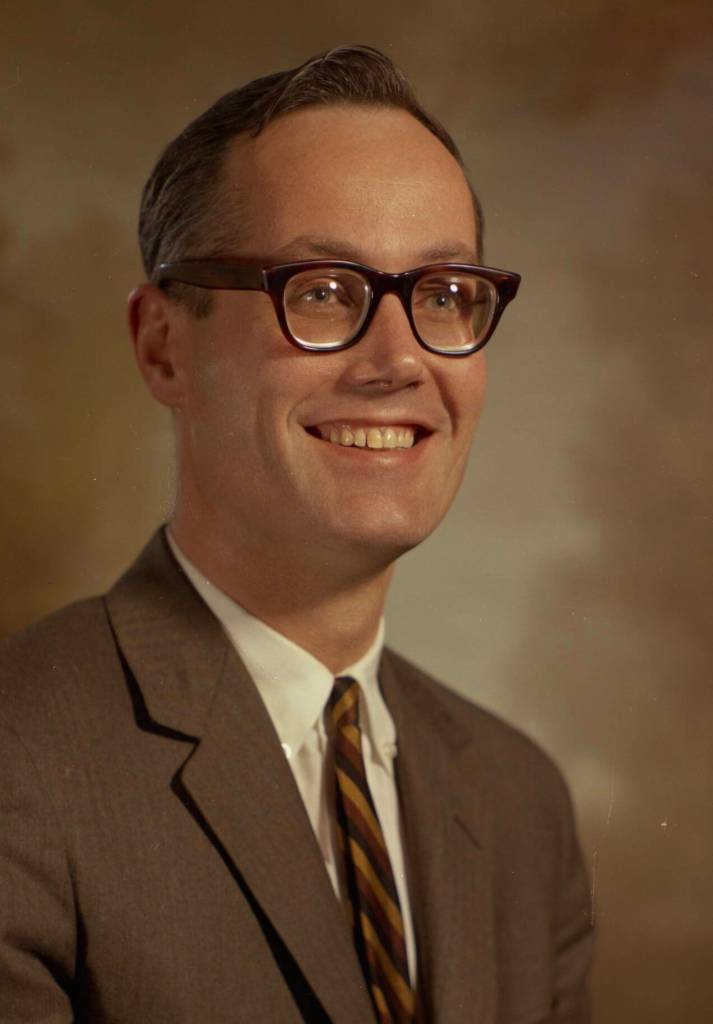
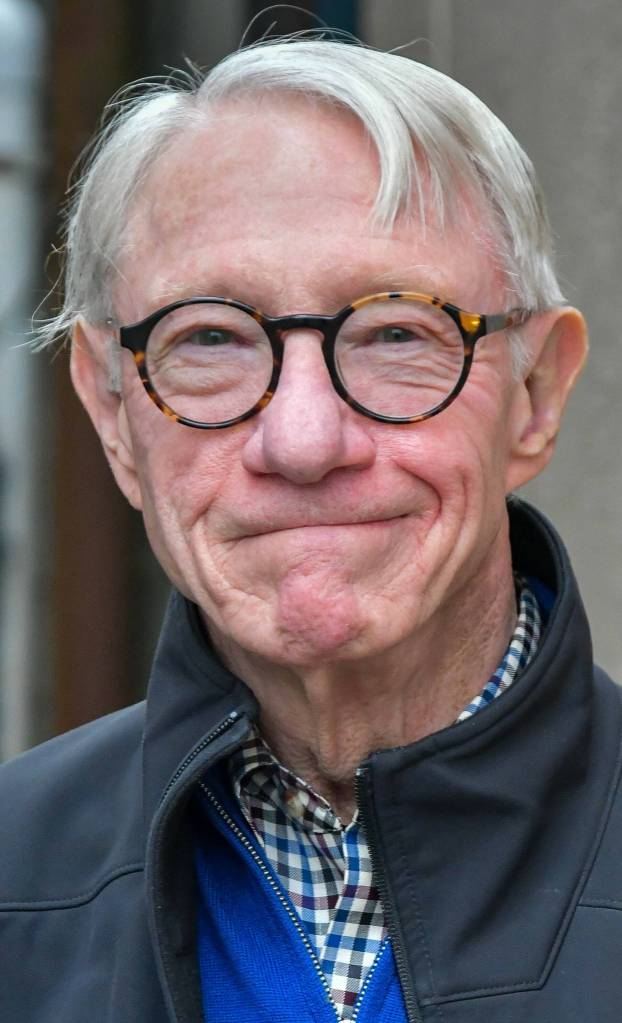


DEAR READER: Of all the politicians I’ve known in my 60 years as a journalist and historian, Slade Gorton stands out as the brightest and most misunderstood.
Our former attorney general and U.S. Senator loathed bigotry, but stood accused of hating Indians because he maintained the Boldt Decision went too far.
On this we fundamentally disagreed, but it never strained our relationship. We spoke one last time a few weeks before his death at 92 on Aug. 19, 2020. “We should be praying for America,” he said as the polarizing presidential election loomed.
Gorton was kind and thoughtful, yet chronically impatient with “fuzzy thinkers” and “duplicitous glad-handers.” The old line about not suffering fools gladly — one of Saint Paul’s memorable epistles — fit him to a T. Foes called him “Slippery Slade” and “living proof that not all cold fish comes in a can.” He was a libertarian/conservative who put principle before party.
Since Grays Harbor’s current crop of Republican office seekers has yet to reveal what it means to them to be a Republican — Is it “my president right or wrong” or “the Constitution and Rule of Law forever?” — this is the first in a series of columns about the “most admirable of human virtues — courage.”
That’s how John F. Kennedy put it in Profiles in Courage, which won the Pulitzer Prize for biography in 1956. Kennedy focused on eight U.S. Senators — Democrats and Republicans alike — who did the right thing for democracy at grave risk to their careers, “the defamations of their characters, and sometimes, but sadly only sometimes, the vindication of their reputations and their principles.”
GORTON’S PROFILE in courage begins in 1962. He was campaigning for reelection to the state Legislature and working with the League of Women Voters on a redistricting initiative to make the process less partisan. Gorton also monitored, with mounting disgust, a vicious political battle in Eastern Washington.
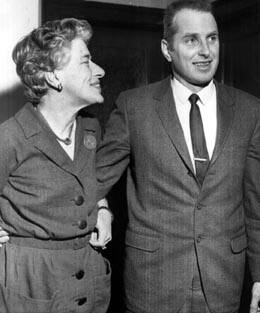
State Rep. John Goldmark, a Democrat whose integrity Gorton admired, was in big trouble. The fallout from that race also cemented a bond of mutual admiration between Gorton and Bill Dwyer, a future federal judge. Only 33, Dwyer was already one of the sharpest trial lawyers in America. He and Gorton came to the defense of John Goldmark.
A Harvard Law School graduate, Goldmark was 45. Sun-tanned and handsome, with a graying crew-cut and muscular arms, he looked more like a rancher than a lawyer because that’s what he was — a rancher.
After seeing combat in the South Pacific as a U.S. Navy officer during World War II, Goldmark, his wife Sally and their two young sons abandoned the East for a ranch with no electricity in the wilds of Okanogan County. Goldmark had served three terms in the Washington Legislature and was chairman of the powerful House Ways & Means Committee.
“John Goldmark philosophically was everything I wasn’t,” Gorton told me in 2009 during oral history interviews for his biography. “He was not only a Democrat, he was quite a liberal Democrat. I loved to debate him because he was an eloquent speaker. He was the best spokesman the Democrats had.”
In the 1962 Democratic primary, Goldmark was challenged from the right in his own party. Donations from the private-power lobby and the John Birch Society boosted his opponent. Front page stories and editorials in the local weekly newspaper painted him as a “pinko.” Goldmark, moreover, was a Jew, they whispered loudly. Outraged, Gorton said anti-semitism reminded him of Mark Twain’s observation that it is “the swollen envy of pygmy minds.”
ALBERT CANWELL, a one-term legislator from Spokane, saw Goldmark as the epitome of the “enemy within.” The celebrated McCarthy era anti-communist appeared at a forum sponsored by the American Legion to warn Okanogan County voters that the “godless Marxist-Leninist menace” was burrowing into their midst in the form of John Goldmark. Canwell also revealed a skeleton in Sally Goldmark’s closet. Years before meeting John, when she was an idealistic young New Deal worker during the Depression, she had joined the Communist Party.
One night when they were dating, John derided communism as an oppressive ideology. Sobbing, Sally told him her secret and suggested he wouldn’t want to marry such a person. John said he didn’t care. He loved her. Instead of pressuring her to quit the party, he felt certain she would grow out of it. She quickly did, feeling foolish at her naiveté.
Not only was he sleeping with the enemy, the right-wingers said John Goldmark’s presence in the Legislature endangered democracy. His membership in the American Civil Liberties Union was further evidence he was “the tool of a monstrous conspiracy to remake America into a totalitarian state.”
“It was a brutal, nasty campaign and Goldmark was slaughtered,” Gorton told me, voice tinged with revulsion.
Goldmark lost his seat in the Legislature, but his indignation was intact. He told Bill Dwyer he wanted to sue Canwell and three others for libel, including the publisher of the weekly Tonasket Tribune. Dwyer took the case for no fee, and with little hope of winning a sizable judgment. The principle was the principal.
THE TRIAL began on Nov. 4, 1963, in Okanogan’s old three-story courthouse.
Dwyer asked Gorton to be the last in a diverse array of 12 reputation witnesses for Goldmark.
“When Bill called, I knew that if I said ‘yes’ it would cost me,” Gorton recalled. “And I knew that if I said ‘no’ I’d be a coward. Looking back, that may have been the pivotal moment of my career in politics. There had been no incident in those first three terms that had really tested my character.”
Gorton said that moment of decision reminded him of the hymn from James Russell Lowell’s poem, “To Every Man.” From memory, he recited it into the lapel microphone from my tape recorder:
Once to every man and nation,
comes the moment to decide,
In the strife of truth with falsehood,
for the good or evil side;
Some great cause, some great decision,
offering each the bloom or blight,
And the choice goes by forever,
’twixt that darkness and that light.
In his book about the Goldmark case, Bill Dwyer wrote, “An outstanding young lawyer thought to have a brilliant political future, Gorton was willing to tell the truth as he saw it about John regardless of what it might cost him with the right wing of his party.”
Gorton testified to Goldmark’s honesty and straightforwardness.
The defense cross-examined aggressively, trying to get Gorton to characterize Goldmark as an extreme leftist.
“[H]e was a leading member of the liberal group of the Democratic Party,” Gorton replied evenly, and that “included the great bulk of the Democratic Party in the Legislature.”
THREE WEEKS into the Goldmark trial, President Kennedy was assassinated in Dallas by an avowed Marxist. The plaintiffs feared their case was also mortally wounded. But Dwyer was masterful. The Goldmark jury, which deliberated in the Courthouse attic for five days, decided that a man’s good name had been tarnished by innuendo. It awarded Goldmark $40,000 in damages, then the second-largest libel verdict in state history.
The rest of the story is that Goldmark never received a cent. The U.S. Supreme Court, in the landmark case New York Times Co. v. Sullivan, ruled a few months later that “actual malice” had to be proven by a public figure in a libel or defamation case. The Goldmark verdict was reversed.
“At least Goldmark was vindicated by winning in front of a jury of his peers,” Gorton said.
FAST FORWARD 15 years. Gorton was Washington’s Attorney General, open about his ambition since childhood to become a U.S. Senator. Nevertheless, he spoke at a recognition dinner in Seattle for John and Sally Goldmark. John Goldmark was fighting the lymphoma that would claim his life at the age of 62.
Saluting his friend’s political and physical courage, Gorton said, “In 1959 when I first became a member of the state Legislature, I took it as an article of faith that I would not like John Goldmark and that we would vote on opposite sides of almost every significant issue. The last half of that prediction turned out to be all too correct.
“The first part did not, because it was from John Goldmark that I learned the most important political lesson of my entire life: That the character and the courage of the individual within our system counted for far more than anything else.”
John C. Hughes was chief historian for the Office of the Secretary of State for 17 years after retiring as editor and publisher of The Daily World in 2008.