From the Wings: The staging of Clue
Published 1:30 am Tuesday, March 31, 2026
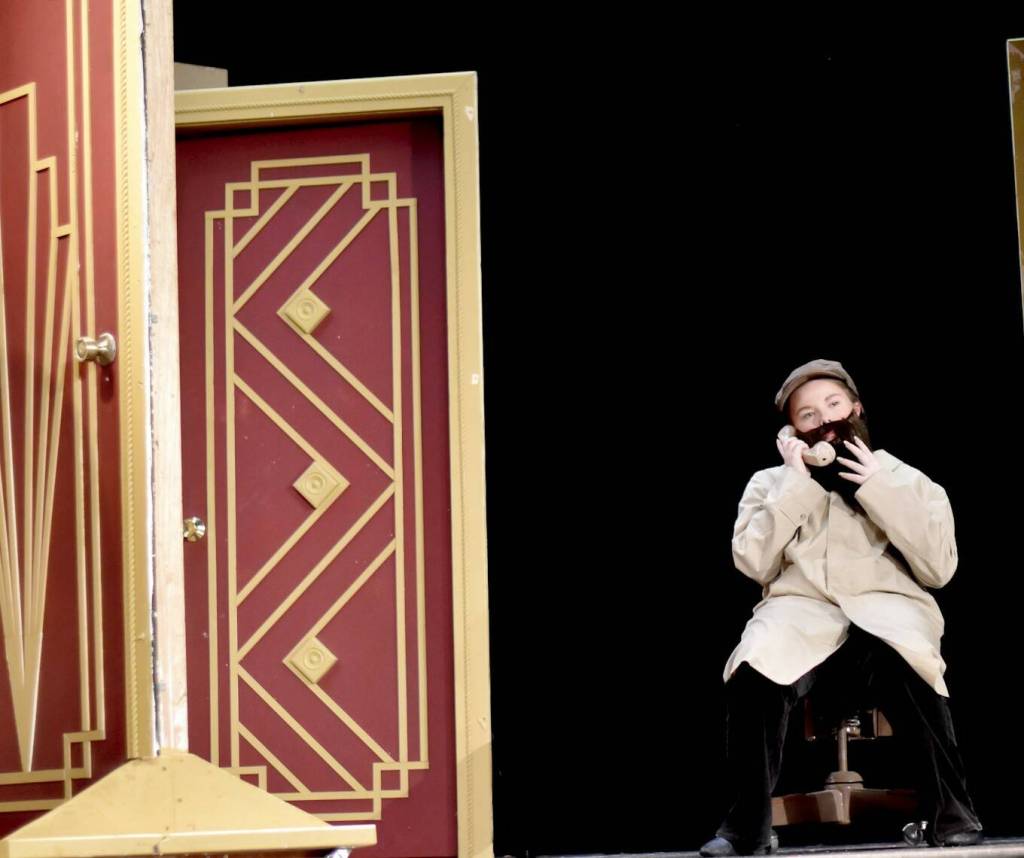
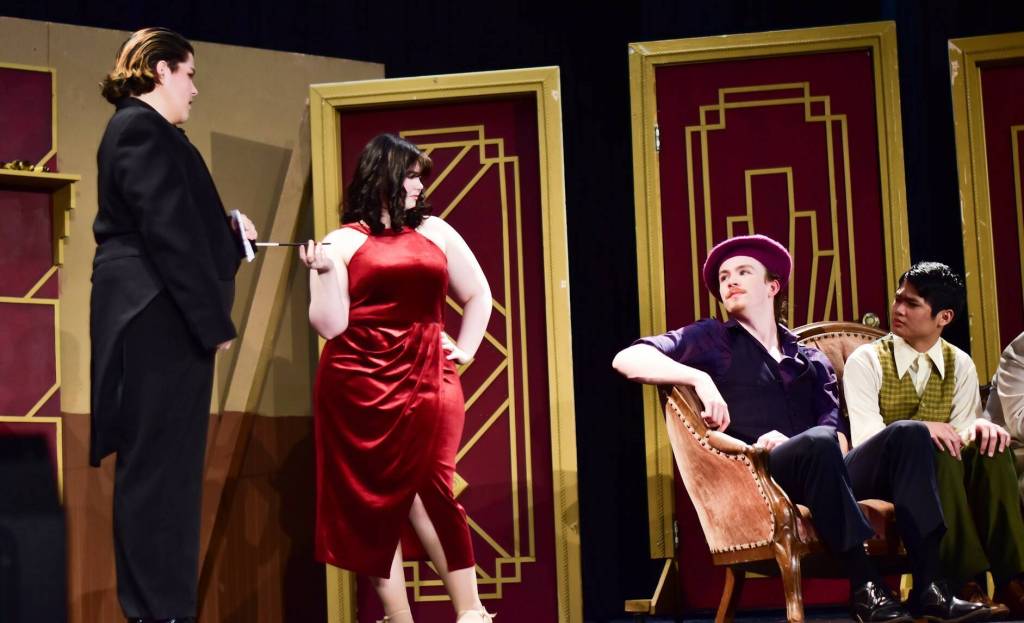
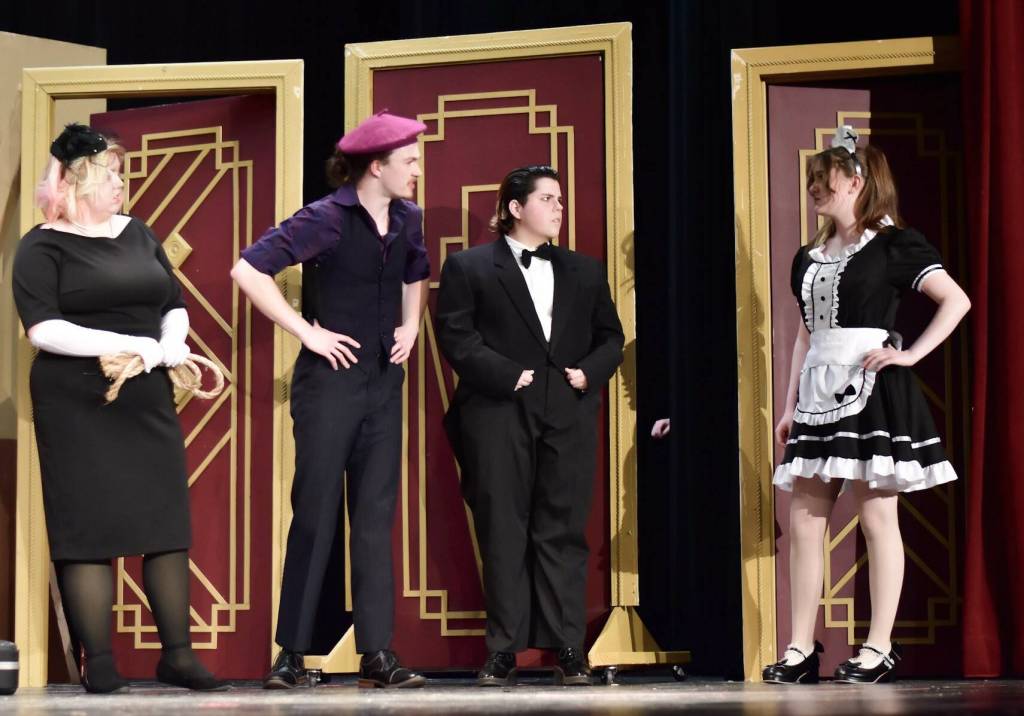


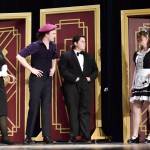
Over the weekend, the Hoquiam Drama Club staged a production of Clue in the Little Theater, evening performances on Thursday, Friday and Saturday, and a matinee on Sunday.
With each performance, the students improved and it was nice to hear the laughs, said Casey Bronson, the director of the production. The laughs meant the cast nailed the comedic timing that underpins Clue’s oddball humor. In attendance for the Friday showing was Principle Brock Maxfield who said that he had a fantastic time.
Before opening night on Thursday, March 26, The Daily World sat down with a number of the cast. Several were already experienced on stage, having participated in 7th Street Kids and Driftwood Theatre while for others it was their first time in drama club. The wide-ranging discussions touched upon how they approached developing their characters, the difficulty in nailing comedy and the value of live theater.
What follows is our conversation edited for length and clarity.
The Daily World: When did you join the drama club?
Andee Wilson, the Cook: Freshman year. I’ve loved being a singer, dancer and actor. I’ve always been into theater but have never been able to do it until now.
TDW: How do you approach creating Cook?
AW: My character description was just a threatening presence. That’s very vague and I wanted to make it minimal, going hunchback, doesn’t talk and doesn’t like anyone.
TDW: Did you find yourself changing how your character interacts with the other actors?
AW: Yes, that is a major thing, especially with reactions to the other characters. I don’t want to give away too much about the play, but there’s a character that my character absolutely hates, and that one’s easy because I glare and snarl.
I really like working with all of the cast because they’re all really good at acting as their characters. It’s really amazing to be able to build this character up off how other people build their characters.
TDW: Do you attend performances at Driftwood Theatre or the Bishop Center for Performing Arts?
AW: Yes, I have. My first ever theater performance was a Bishop Center show, You’re a Good Man, Charlie Brown. That was my first time seeing theater, I think in 5th or 6th grade, and that’s what sparked it. Seeing all the emotions and thought put into the set, the costumes, the sound effects, the lights and all the work that the actors had put into it. It was so eye-opening and mesmerizing to look up onto the stage and see people who love what they do.
TDW: How long have you participated in Drama Club?
Zacharie Elliott, Colonel Mustard: This is actually my second year participating in the club. Last year in A Year With Frog and Toad! I participated in the ensemble and it was really fun, so I decided to come back.
TDW: What prompted you to move from ensemble to front stage?
ZE: I’ve been with the 7th Street Kids program, so I’ve previously made that move from ensemble to lead before, and it was a really fun experience. I’ve always been really outgoing, so I could say the transition for me was pretty natural.
Because this show is a lot of joke after joke after joke, it’s definitely been a challenge to figure out the process. I’ve done musical theater a lot, so this is a new thought process for me. I had to relearn acting in a weird way because it’s all dialogue and action. But it’s been a really interesting experience, it’s good to have that experience under your belt as well.
For example, with me with Colonel Mustard, I’m playing a comedy character, so I’m having to really focus on here’s my line and here’s my punch line. You have to really hone in on it because a punchline won’t land if you don’t know it.
TDW: How did you approach developing the character of Colonel Mustard?
ZE: A lot of my references were a lot of old war movies. I watched the movie Clue and obviously took a lot of reference from that. But then a lot of it was also looking at movies. MASH the movie was a weird inspiration of mine, specifically. I watched the performance of, I think the General, and thought I’m going to keep that.
And then a lot of it’s been in my head, rethinking how would this guy who’s been in a war react to this situation? It’s been a slower process, actually, than developing any other characters I’ve been.
TDW: How do you see the role of theater with the availability of generative AI?
ZE: I personally think that theater is going to become even more important in the future, especially because art is even becoming more important with the uptick of AI and technology usage. It’s very important to remember that we’re humans and nobody can really replicate that experience. Some of the most magical things I’ve ever seen, no robot or any amount of mathematical code could never recreate the magic of some of the performances I’ve seen in theater.
TDW: When did you join drama club?
Lynn Perry, stage crew: This is my first year. I was in drama class at the beginning of this year, but I’ve also been on stage here and there my whole life. I’ve been in choir and I did a couple of performances at Pride parades and stuff in town.
TDW: What’s involved to ensure the behind-the-scenes is running in parallel to what the actors are doing on stage?
LP: Most of the stuff you have to pay attention to is everyone’s lines: you have to know everyone’s lines so you know when your cue is coming up to do something. You have to know exactly what’s going on, such when to close the curtain, so no one’s just standing there.
TDW: During the weeks of rehearsal, how were you working with the cast?
LP: I was making sure everyone knew where they were going and making sure everyone knew where things would be moved to. As we’ve worked through it, everything works around each other and we become one big group.
TDW: Do you prefer tech or being on stage?
LP: I really like tech, but I also like being on stage. It really depends on the character; last time I was on stage, I played a character who felt really close to myself. When I’m in tech, I feel powerful; I really like the feeling of helping people.
TDW: What do you think that people in the audience don’t understand about the amount of work that goes in tech?
LP: Because they don’t see it, out of sight, out of mind, people don’t see how much stuff has to move around and how much tech runs around making sure everything works smoothly because we’re also working with the actors and making sure that they have the props they need for a scene.
TDW: What made you interested in doing theater?
Sophie King, Mrs. Peacock: My freshman year I took drama because I had already done band and all of that. I already knew I enjoyed being on stage, so I gave it a try. You get to go on stage and sing and dance or act; it’s just wonderful.
TDW: How was it developing the character of Mrs. Peacock and learning the lines?
SK: It was very interesting because my character is not much like me. She is an old, religious lady, and a very hysterical character who is also Southern. It was fun to get out of my comfort zone and learn something new, because I have never done accents in theater.
This is the second time I’ve had a lead and actually had lines. It’s an experience to learn stage presence and the right tone of voice to use for certain things to make it funny or sad. And learning the emotions and how to portray them and make them bigger than what you would in normal day-to-day life.
TDW: Have you performed in Drama Club before?
Charlotte Mack, the cop: Last year I did the play A Year With Frog and Toad! and I’ve also done some 7th Street Kids and Driftwood. I have worked on Casey with other plays as well.
TDW: How does this play compare to other productions that you’ve done?
CM: I feel a little bit more chiller than the other ones, obviously since it’s all my friends. We’re still getting a lot of stuff done but it’s more relaxed and less demanding. We do have late nights and other things that we have been stressing about, but otherwise it’s been pretty much smooth.
TDW: What should people expect to see for the Clue when they’re in the audience?
CM: A lot of laughing, definitely. It’s really funny. Even with my part, there’s the pauses. There’s the perfect dialogue, obviously. Overall, it’s just a really feel-good show.
TDW: What prompted your interest in theater since you were eight years old?
Connor Watkins, Mr. Boddy: My older three sisters are theater kids, and they passed it on to me, because I seemed to be interested in it more than my brother was.
TDW: What makes theater fun with having to memorize lines and a lot of stop-and-go during rehearsals?
CW: There’s a lot of trial and error that comes with memorizing things, and there’s a lot of slip-ups that makes it really funny to be around; sometimes a slip of the word is really, really freaking funny. And it’s generally just a good time because nice people are here.
TDW: What made you decide to audition for Clue?
CW: I knew there was a theater here and I hadn’t done it last year, so I thought, “Why not do it?” And my siblings were encouraging it, especially Naomi. They went to rehearsals with me actually.
TDW: For you, why be on stage and watch performances?
CW: What I get out of watching people on stage, it’s just a really nourishing experience because most people are doing what they love. And they’re putting on a show for the community, which is a really good thing. For being on stage, it’s basically the same as what it’s like watching people on stage — it’s bringing something for the community to look forward to.
TDW: Have you performed in other productions besides Clue?
Jestine Gleason, the motorist: I’ve been doing shows since second grade, starting in Missoula Children’s Theatre and then throughout high school.
TDW: How was it then switching from Missoula to a high school show?
JG: It was a big shock almost because I wasn’t used to, not the stress, but the pressure of a high school show. Going from dancing in a kitty costume and working for a week to working months on a production is just a crazy change of pace.
TDW: What’s keeps you wanting to continue participating in theater?
JG: My brother was in different shows and all around the area, at Grays Harbor College, 7th Street Kids, and that sparked my love for theater. And I’m a very out there person, so it’s just a place where I don’t feel judged.
TDW: How long have you been part of Drama Club?
Keira Kountz, Mrs. White: I started the theater in freshman year, so I’ve done all four years.
TDW: Did you have any other background in theater at all before coming to this?
KK: I started in the 8th grade, doing a show with Missoula [Children’s Theatre]. I was in Johnny Appleseed. It was my first ever show, and we performed at Central Elementary. That’s where everything went down — I found it and I fell in love.
I’ve also done multiple 7th Street Kids shows, and I’ve also done a show at the Bishop Center for Performing Arts, Groundhog’s Day.
TDW: What is it about theater that keeps you auditioning or working through the nerves to audition?
KK: Actually, I started out with severe stage fright, and then when I finally did it [auditioned], I fell in love because not only is it an amazing community, you get so close with people you would have never met any other place, but also I get to do more things. I get to express my love for arts and stuff physically. I like being active, but I’m not really a sports person so it’s like my own sport.
There’s been shows where I’ve even gotten to help direct scenes, and I’m actually planning on continuing to do theater once I’m in college.
TDW: What prompted you to consider moving into the director role?
KK: I find myself in almost every show I do having all these ideas for the set and for how we could do things. I find myself almost internally micromanaging things because I have so many ideas of what we could do.
The first time that I got a taste to direct a scene was in Groundhog Day the Musical. There was a scene with a car chase and I directed the entire chase scene with the cars. I even made a little animation for everyone so they could help understand it because everyone was having a really hard time with it.
I stayed late to almost midnight with the director, Andrew Gaines. We were making people out of music stands and going through the motions of everything. And I’ve realized then that I love putting my thought into the productions, being able to do things beyond just acting because when you’re an actor, the directors say, “Do this.” I like the creative freedom that you can have as a director.
TDW: One question I’ve been asking some of the students is knowing the amount of time it takes to produce a play and having generative AI do all that work with a mouse click, what are your thoughts on this?
KK: With AI, it could be a detriment to the theater community environment but the thing that keeps me from worrying too much is that a lot of the people who come to shows and support shows do theater themselves. We all support each other, we all attend. It’s one of those things where you can never replace something that’s truly made by man. There’s always a realness to theater that kind of protects it from the ever-growing consumption of art by AI.
And as artist who does digital and traditional art, it daunts me because it’s easier to use AI. But at the same time I do theater and you can’t take this from us because we support each other. There’s so many more theater people in the world than anyone ever realizes.