The McGillicuddys counted a lot of trees and votes
Published 1:30 am Friday, July 31, 2026




DEAR READER: Tributary to forests “vast beyond comprehension” and “rich beyond calculation,” Grays Harbor was the West’s fastest-growing timber port at the turn of the 20th Century.
In the hierarchy of logging, the camp boss was the “Bull of the woods,” but the timber cruiser, who reconnoitered the forests to estimate the amount and value of standing timber in a particular tract, arguably was the industry’s MVP. Also one of the top paid.
In the 1930s, an old logger in a weathered Filson jacket told historian Ed Van Syckle that a great cruiser boasted “knowledge of the terrain, legs like a sprinter, the constitution of a bear, and the ability to count 2,000 paces” –– the distance along a section of standing timber. “The best guesser is the best cruiser,” the old-timer said. Timber buyers based their offers on cruisers’ estimates. “If the cruiser was good at his job, the buyer got what was to be expected out of the stand,” Van Syckle wrote. “If the cruiser was slovenly, the ‘cruise’ could be thousands of board feet off one way or another.”
When Frank H. Lamb arrived on the Harbor in the winter of 1898, with degrees from the Biltmore Forestry School (America’s first), George H. Emerson, manager of the North Western Lumber Co., met him at the railroad junction east of the Harbor. Though there was four to six inches of slush at the lower elevations, Lamb was instructed to survey a tract some 30 miles north of Hoquiam in the foothills of the Olympics. Likely testing the mettle of the slightly-built young Stanford University graduate courting his daughter, Emerson declared, “Do not let this little snowstorm delay your starting at once on the trip.”
Lamb shrewdly engaged an old timber cruiser to act as his mentor and proved to be a quick learner during two chilly weeks on the ground. Passing Mr. Emerson’s test, Lamb married Alice Emerson in 1900 and over the next 50 years became Hoquiam’s greatest civic activist and one of the leading industrialists in America, with 22 U.S. and foreign patents for logging equipment.
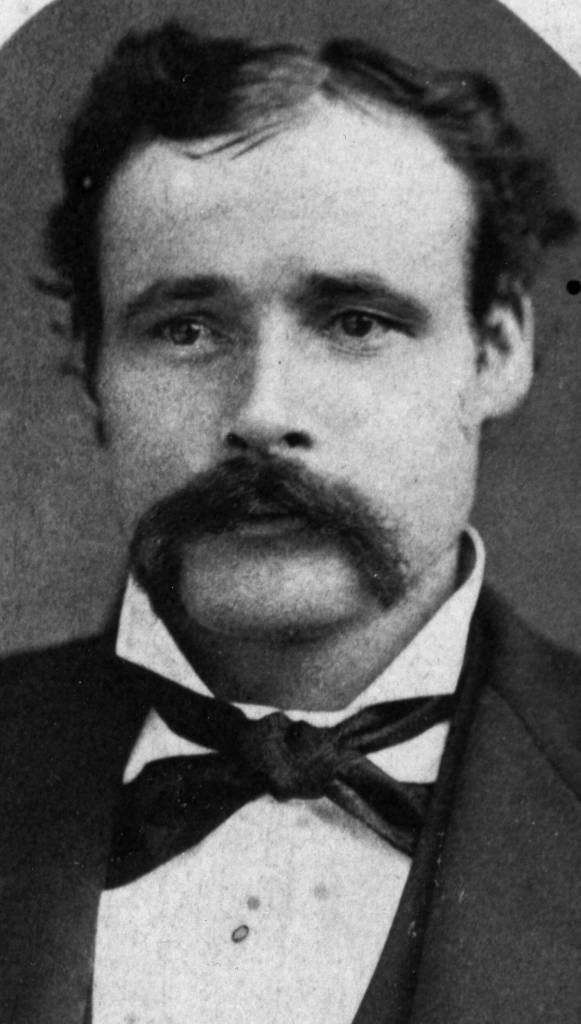
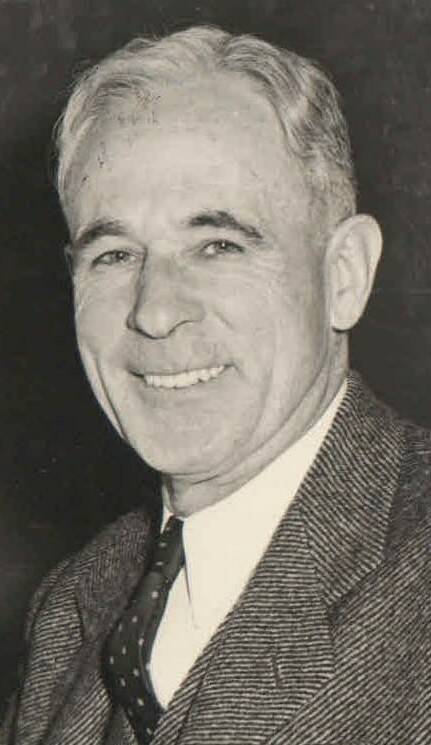
OLDTIMERS like Lamb told Van Syckle the greatest timber cruiser they ever knew was Jeremiah A. “Jerry” McGillicuddy Sr., a handsome Irishman. McGillicuddy is the great-grandfather of two of my friends of 65 years, Port Commissioner Tom Quigg and his sister, Kathy Quigg Ewen, The Daily World’s great longtime photographer. This is a classic immigrants’ success story:
Tom and Kathy’s great-great grandparents, John and Bridget McGillicuddy, left County Kerry, Ireland, in 1847, providentially surviving the potato famine that claimed a million other poor peasants. Shipwrecked off New Brunswick, the resilient young couple made it ashore and put down new roots.
Born in 1852, their enterprising son worked in the Maine and Pennsylvania woods before heading West. In Gardiner, Oregon, 200 miles below Seaside, Jerry McGillicuddy and his brother-in-law, Jim Cowan, met George Emerson, who was managing a sawmill for San Francisco timber and shipbuilding baron Asa M. Simpson.
When Emerson moved to Grays Harbor in 1882 to tap its “Comstock Lode” of Douglas Fir, Cowan and McGillicuddy were close behind. The pair homesteaded a few miles north of Hoquiam at what came to be called New London. McGillicuddy teamed with Alex Polson, an ambitious young logger, to locate promising property.
By the turn of the century, McGillicuddy was a “full-fledged timber cruiser, perhaps the first in the Grays Harbor region,” Van Syckle notes in “They Tried to Cut it All,” his landmark history of logging and lumbering here. McGillicuddy literally left his registered mark –– four notches –– on key trees during each cruise. From 1901 to 1913, he was the county’s chief cruiser, overseeing “the first comprehensive cruise of timber in the county for tax purposes.” It was also the first cruise of its kind in the state –– inventorying 22.5 billion board feet of timber.
We’d be remiss if we failed to note that Tom and Kathy’s great-grandmother was a resilient pioneer in her own right. Agnes Cowan married Jerry McGillicuddy in Oregon in 1880. When her husband departed for Grays Harbor to scout more promising pastures, she was 23 and pregnant. Then, when her spouse wrote it was time for her to join him here, Agnes “set out all alone” from the southern coast of Oregon, traveling by boat, stagecoach and train, with a newborn in her arms. “From Portland she went to Kalama, then over the Northern Pacific to Tenino; then by narrow gauge railroad to Olympia, where she boarded a boat to Kamilche; then by stage to Montesano, where she boarded a boat for the last lap of a hard journey to Hoquiam,” according to a family history.
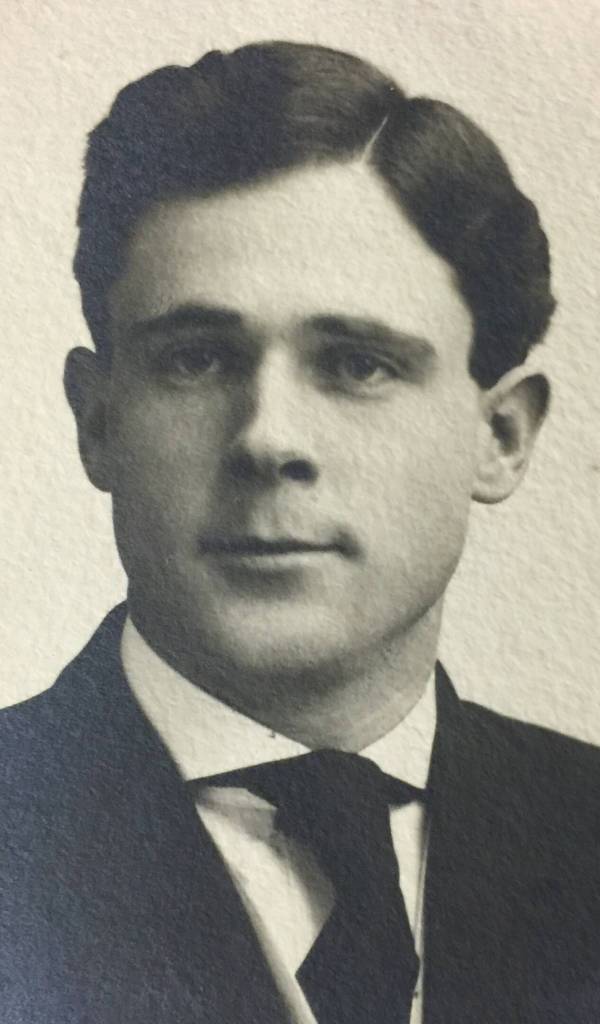
JERRY MCILLICUDDY JR., Tom and Kathy’s grandfather, was a chip off the same block of enterprise and integrity. Having worked in banking for Dexter Horton in Seattle and attended college on both sides of the Cascades, he was a much-admired Democrat in an era when Republicans mostly ruled the roost here and around the state. McGillicuddy was only 29 when first elected County Treasurer in 1912. Seeking re-election in 1914, he achieved something remarkable, then as now: bipartisan support for a job well done.
In that era, voters were required to “register” as Democrats or Republicans, with no cross-over voting allowed in primary elections. “Let the People Rule,” a September 29, 1914, editorial by Colonel J.J. Carney, editor and publisher of the steadfastly Democratic Aberdeen Herald, lamented that the political party bosses had too much control over who got nominated. The increasingly influential Washington State Grange was also lobbying for reforms after a half-baked compromise was adopted by the Legislature.
“The primary law of the State of Washington is a long way from the law that the people expected,” Carney wrote, charging that “a Republican legislature enacted this law under pressure. The state conventions of that party had become so notorious as a public market where honors (?) were swapped like mules at a Missouri county fair that something had to be done. The ‘something’ is the present primary law, which is supposed to give voters a choice of officials for whom to vote, but which places a bridle, with side blinkers, on him, if he attempts to side-step his party, even though the office may be one of no consequence whatever in a party sense.”
Carney held hope for a more democratic future, citing the good news that McGillicuddy had been nominated for re-election by both the Democratic and Republican parties. “The fact that Mr. McGillicuddy, whose present term was so satisfactory to the county at large that no Republican opposed him in the primaries openly, and further fact that, without any solicitation or knowledge upon the part of Treasurer McGillicuddy or his friends of the Democratic faith, a large number of Republicans took the trouble to write his name on their ballots is a compliment of which that young man may well be proud,” Carney wrote. “It is a hopeful sign of the times when county voters can pick officials for their worth instead of looking for a party button on their coat lapel.”
COME NOVEMBER, Jerry McGillicuddy Jr. received nearly 74 percent of the vote, swamping a Socialist. He went on to serve as a county commissioner, resigning in 1918 to join the Boeing Aircraft Company. But before McGillicuddy could move his family to Seattle, Bill Boeing sent him back to Grays Harbor as manager of his timber company, Greenwood Logging Co. When Greenwood was dissolved in the late 1930s, McGillicuddy rejoined Boeing Aircraft and was assistant manager of its subassembly plants during World War II, snagging three of them for the Harbor. After the war, he moved to Eugene as logging manager for West Coast Plywood’s Oregon timberlands.
Three more of Jerry Sr.’s sons, Daniel, Cornelius and Blaine, also achieved prominence in the timber industry, with Dan serving as the county’s chief forester. He went on to become a Grays Harbor PUD Commissioner for 23 years.
Two great Harbor families with deep Irish roots were united in 1940 when Charlie Quigg married the ebullient Patricia McGillicuddy. Their offspring –– Tom and Kathy, their brother Mike and sister, Jane Quigg Baker, together with the siblings’ children and great-grandchildren –– can take pride in a classic story of the American melting pot.
John C. Hughes was chief historian for the Office of the Secretary of State for 17 years after retiring as editor and publisher of The Daily World in 2008.