Cosmopolis Specialty Fibers owner presents a prosperous future
Published 1:30 am Monday, June 15, 2026
Last week The Daily World reprinted a Seattle Times article entitled “Risks looming at Cosmo becoming more clear.” In my view, that characterization is incorrect and unfairly links the tragic events at Longview with facilities that employ fundamentally different technologies, including Cosmopolis Specialty Fibers (CSF). This appears to be the work of people who believe the maxim “never let a crisis go to waste” is a useful political tool.
Longview is a kraft pulp mill. Cosmopolis is a sulphite pulp mill. These are fundamentally different industrial processes. Sulphite mills producing red liquor as a byproduct have no history of comparable explosions and certainly none in Washington state.
The Longview implosion involved a pressurised white liquor tank. White liquor is a high-pressure, strongly alkaline kraft process chemical. The tank failure and resulting implosion is a kraft-specific failure mode involving pressurised vessels.
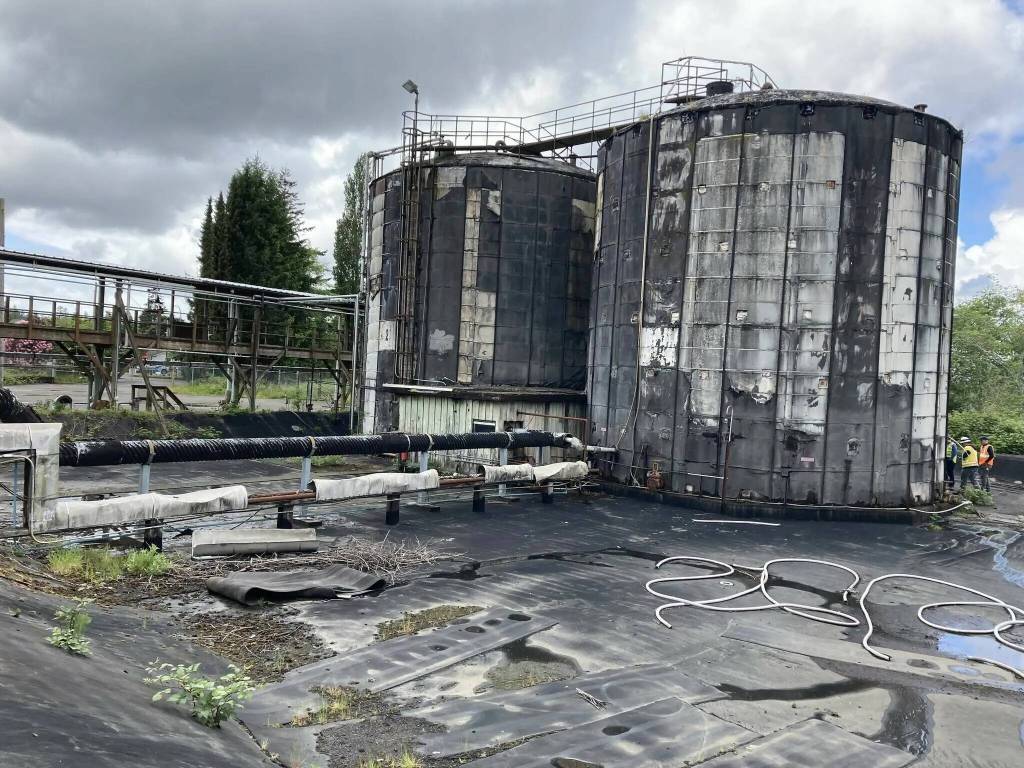
CSF’s red liquor is stored in purpose-built non-pressurised tanks at atmospheric pressure. It is acidic not alkaline. It is approximately 80% water. The physical failure mode that killed 11 people at Longview — the implosion of a pressurised alkaline white liquor vessel —is chemically and mechanically impossible with acidic red liquor stored at atmospheric pressure.
EPA site inspection result — May 22, 2026:
“We did not find anything that is a cause for immediate concern related to the river. No pH below 7.”
This text from an EPA official was made just four days before the Longview tragedy. It is difficult to reconcile that conclusion with subsequent efforts to portray Cosmopolis as presenting an immediate threat to public health or the environment.
To date, I have remained largely silent because I believed it was better to focus on raising the funding necessary to restart the mill and restore 210 family-wage jobs in Grays Harbor than to become embroiled in public disputes.
Unfortunately, it is no longer possible to ignore what I believe has become a pattern of regulatory overreach.
For the past 18 months, certain officials have attempted to portray the company as violating Washington’s Climate Commitment Act. That assertion is incorrect. CSF has been idle since December 21, 2022 and does not produce carbon dioxide emissions at levels that would otherwise place it within the program. Our dispute is not with the legislation itself but with its application to an idled facility.
The Seattle Times article also failed to note that in May 2025 we reached agreement with the EPA on the process required to obtain a Notice of Completion under the March 2024 Unilateral Administrative Order. Not a single word of the Order was changed. The agreement concerned process and timing, not concessions.
I believe most people are more interested in the future of Cosmopolis than they are in our disputes with government agencies.
The best predictor of future performance is often past performance.
When the Gores Group decided to sell the mill after its closure in December 2022, they did not simply choose the highest bidder. They chose the ownership group they believed had the greatest chance of restarting the facility.
Why?
Because in 2005 we acquired a similar softwood dissolving pulp mill in Port Alice, British Columbia. The mill had been closed for two years. We purchased it through a bankruptcy process, secured agreements with the Province of British Columbia, raised $65 million of investment capital and successfully completed a restart.
That mill, renamed Neucel, generated more than 325 family-wage jobs, brought approximately $1.6 billion into the local economy over the following 15 years, and generated at least $650 million of tax revenues for various levels of government in Canada.
After seeing what we accomplished in British Columbia, Weyerhaeuser invited us to visit the Cosmopolis mill in 2006. Our visit occurred on the final day of Weyerhaeuser’s operation of the facility.
At that time I concluded that Cosmopolis was superior to Neucel because of its people, its safety culture, its access to world-class timber resources, and its ability to produce some of the highest purity cellulose grades in the world.
Twenty years later, my view has not changed.
From September 2006 it took four years to raise the capital necessary to purchase Cosmopolis from Weyerhaeuser. My colleagues and I received no salaries and no expense reimbursements during that period. We were driven by the conviction that Cosmopolis was not a tired business whose time had passed.
It was not true then and it is not true now.
If it were not for a series of regulatory decisions by the EPA and Department of Ecology, I believe Cosmopolis would already be operating and approximately $200 million annually would have been flowing into the Grays Harbor economy. Those dollars would support employees, contractors, suppliers and local businesses.
Contrary to the narrative advanced by some critics, CSF is not a failing business. A restarted Cosmopolis has the potential to be one of the most profitable pulp operations in the United States on a per-tonne basis. More importantly, it can become much more than a pulp mill.
Cosmopolis is uniquely positioned to become America’s leading wood-based biorefinery.
There are four integrated business platforms that all add up to more jobs and prosperity for Grays Harbor:
1. Specialty Cellulose – our existing core business.
2. Lignin Products – high-value specialty products derived from renewable wood resources.
3. Hemicellulose Solutions – bio-based chemicals and advanced renewable products.
4. Digital Infrastructure and AI Campus – powered by renewable biomass energy generated on site.
The second and third platforms mirror elements of the strategy successfully employed by Borregaard in Norway, a company with a market value exceeding $2 billion for their 160,000-tonne high purity cellulose mill, CSF is 150,000 tonnes.
At Borregaard’s facility, more than 1,000 people are employed in highly skilled and well-paid positions. We believe Cosmopolis can support a similar level of employment growth over the next five years.
The fourth platform reflects another unique advantage of the site: the opportunity to generate renewable biomass power and pair that power with digital infrastructure and artificial intelligence computing facilities without undermining local power supply or increasing costs for residents.
Reasonable people can disagree about environmental policy. What should not be disputed is the importance of making decisions based on facts, sound science, engineering reality and a fair assessment of both risks and opportunities.
The people of Grays Harbor deserve to decide for themselves whether the future of this site should be determined by investment, innovation and job creation, or by regulatory obstruction and purposeful interference designed to prevent us from raising the financing to restart the mill.
I remain confident that Cosmopolis Specialty Fibers can once again become one of the most important industrial employers in Washington state. More importantly, I believe that over the next decade Cosmopolis can evolve into America’s leading wood-based biorefinery, creating hundreds of family wage jobs, attracting hundreds of millions of dollars in new investment for sustainable businesses, and establishing Grays Harbor as a center for advanced manufacturing, renewable energy and fuels plus for digital infrastructure.