Olympic Region Harmful Algal Bloom Partnership: Safeguarding lives and coastal traditions
Published 1:30 am Monday, March 30, 2026


During the 18th Annual Razor Clam and Seafood Festival, thousands visited Ocean Shores to sample seafood and dig razor clams since the approved harvest dates of March 17 to March 24 overlapped with the event. And this week, razor clam digs are confirmed from April 1 through April 7.
The fact that harvested razor clams are safe to consume and that digs haven’t been canceled as frequently as in previous decades is due in part to the Olympic Region Harmful Algal Blooms (ORHAB) Partnership, a coastal network of state agencies and tribes that analyzes seawater samples to safeguard lives and cultural traditions.
The origin story of ORHAB Partnership dates to the early 1990s when Miranda Wecker, the director of the University of Washington Olympic Natural Resources Center, conducted a survey of people along the coast, asking about their concerns.
“And out of all of the things that could have been listed, harmful algal blooms came to the forefront because the people had suffered from multiple closures,” said Vera Trainer, the aquatic sciences director at the University of Washington’s Olympic Natural Resources Center.
Unlike some species of phytoplankton that become visible when their population explodes into what is called a bloom, such as the red tide that occurs off the coasts of California and Florida, the phytoplankton species along the Washington coast remain invisible to the naked eye.
“It’s a harmful algal bloom that you can’t see,” said Micah Rogers, a harmful algal bloom specialist with the Washington Department of Fish and Wildlife (WDFW).
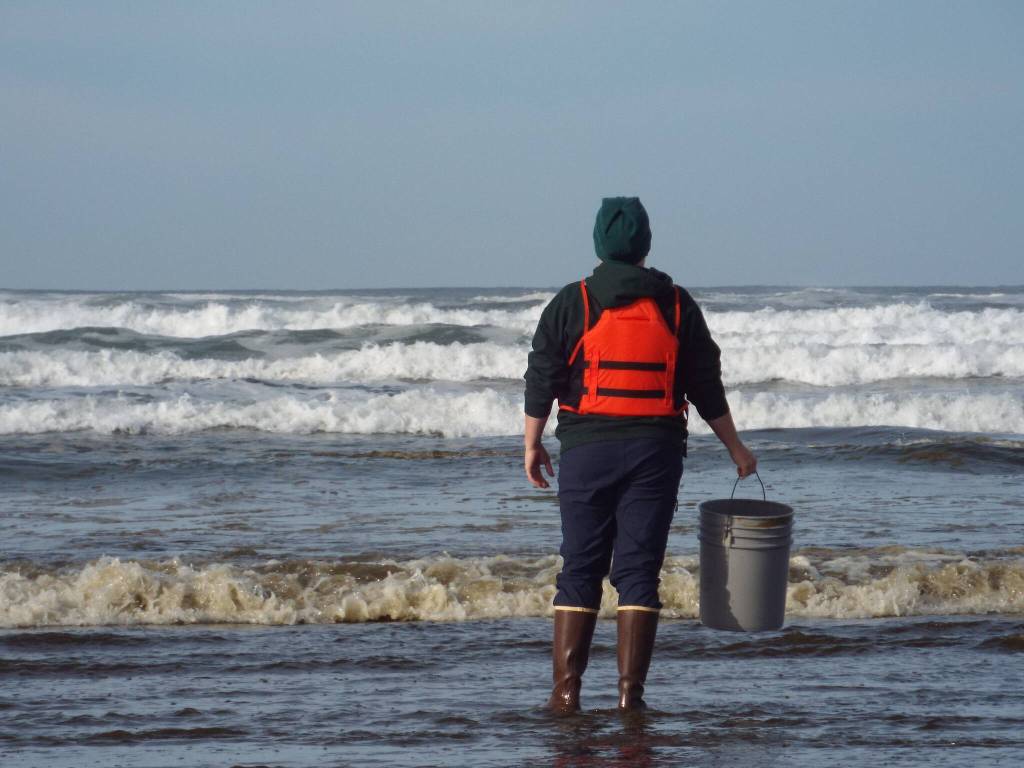
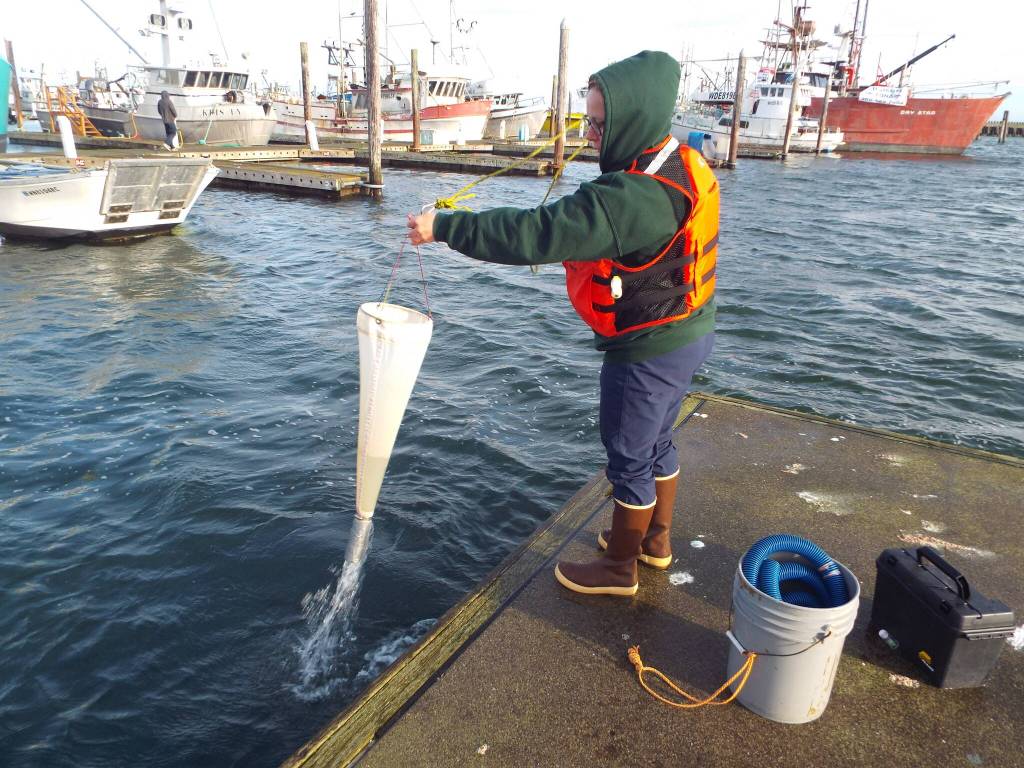
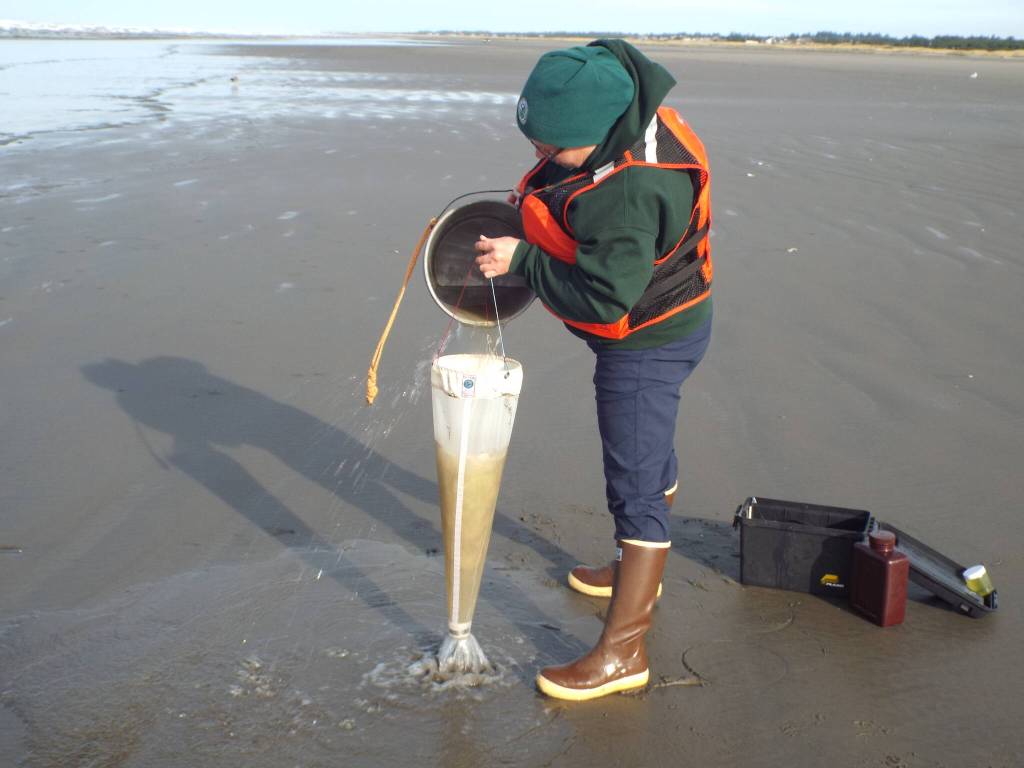
Twice a week, on Mondays and Thursdays from March through October, unless there is a storm, Rogers is on the road collecting water samples. She visits Westport Marina, Twin Harbors beach, Tokeland Marina and Long Beach Peninsula.
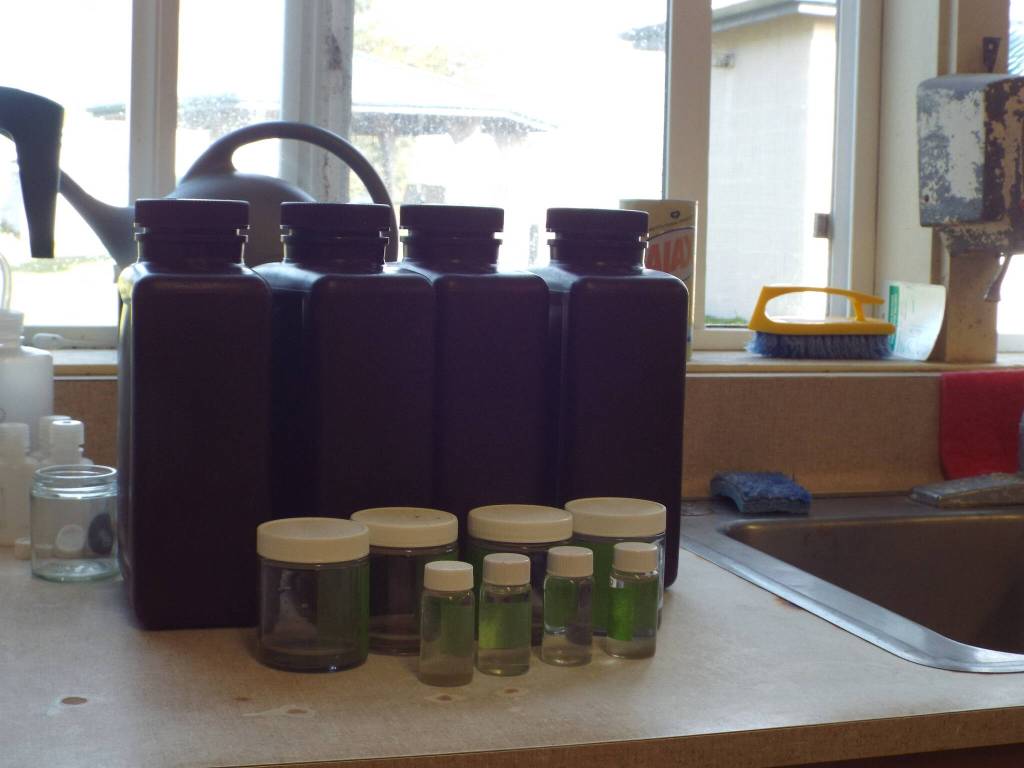
Depending on the site, collecting samples may require standing on a dock and lowering a bucket into the water or walking into the surf to scoop up water. The water is either poured directly into one of three collection containers, each smaller than the last, or filtered through a plankton net before being poured into a container. At each site Rogers also makes notes of time when the sample is collected, weather, the surf conditions when collecting at the beaches, salinity, dissolved oxygen and temperature.
Then it’s a return to the WDFW office in Ocean Park, where Rogers is based, to analyze the samples. During the winter, she visits the four sites once a week on Mondays.
Further up the Washington coast, colleagues with the Makah Tribe, Hoh Tribe, Quileute Tribe, Quinault Indian Nation and Olympic Natural Resources Center are also collecting water samples at their sites. Within these samples is a snapshot of the marine phytoplankton species that are the foundation of the marine food web along the Washington coast. Razor clams, oysters, Dungeness crab, mussels and fish consume these phytoplankton.
Rogers and her colleagues analyze the samples for three specific phytoplankton genera – Pseudo-nitzschia, Alexandrium, and Dinophysis, which in turn are comprised of many species – because some of the species produce naturally occurring neurotoxins. Razor clam diggers are likely familiar with the neurotoxin domoic acid, but other neurotoxins present in these phytoplankton are saxitoxin and okadaic acids.
Marine shellfish aren’t affected by these neurotoxin, and depending upon the species, they may either flush out the neurotoxins or store them. Mussels process the neurotoxins quickly. Crabs store the neurotoxins in their organs, and razor clams store the neurotoxins in their flesh.
“Razor clams have a really high fat content, and that fat really holds on to, particularly the domoic acid, for a very long period of time,” said Rogers.
Memory loss, numbness, gastrointestinal distress, and death can result when people, and even marine mammals, such as sea lions and birds, consume shellfish or fish that have high levels of these neurotoxins. Cooking and freezing don’t destroy the neurotoxins.
“It’s the glutamate receptors in your brain that are impacted by these toxins,” said Trainer. “They bind strongly to the glutamate receptor because domoic acid is like an amino acid. Your glutamate receptors are important: They process glutamate to allow your memory and learning to take place, and so there can be severe consequences at low levels.”
The neurotoxins produced by these phytoplankton species support their metabolic processes. For the Pseudo-nitzschia genus, domoic acid helps the algae survive in the harsh ocean environment.
“Domoic acid, we believe, plays an important role in the cell’s ability to acquire iron,” said Trainer. “Iron is a very important and limiting nutrient in the coastal ocean, so it’s in very low quantities. It’s almost like a game of musical chairs out there — whoever can get iron is going to survive.”
At the ORHAB Partnership’s beginning, the water samples were sent to the National Oceanic and Atmospheric Administration for analysis, but the tribes and the state requested that they learn how to conduct the analyses themselves.
“It took a while to get all the equipment out to all the locations, but these are amazing scientific labs,” Trainer said. “They might be in a small spot in kind of a crowded space, but they’re able to do some really amazing science in near real time.”
Only when Rogers puts a sample of the water under a microscope are these phytoplankton visible. By noting the presence or absence of the species or genus of the neurotoxin-producing algae in the sample, Rogers can extrapolate the density of these phytoplankton per liter. Although she and the other technicians can identify the species being monitored, there are species of Pseudo-nitzschia that can’t be identified using a light microscope. This is why an enzyme-linked immunosorbent assay (ELISA) is also used to confirm the presence of domoic acid inside the algae.
“When you go to your doctor’s office and you get a COVID test, it’s basically a simplified ELISA test,” said Trainer.
The reason for bloom monitoring is that there are two ways the levels of neurotoxins build up in the shellfish. A bloom could be a high concentration of phytoplankton for a short time or a low-level bloom that lasts a long time.
When Rogers looks at a water sample under the microscope, she’s seeing a sample of what the shellfish are consuming and can estimate the percentage of the neurotoxin-producing phytoplankton of their diet. If the water samples show a high percentage of these phytoplankton species, it means the shellfish are most likely consuming more of these neurotoxin-producing phytoplankton species than the non-toxic species.
What causes harmful algal blooms? Trainer said it’s thought that when ocean conditions are favorable, such as high nutrients, sunlight and water not too turbulent, it is conducive to a population explosion, and temperature appears to be a major driver.
And the blooms can happen year-round, which is why Rogers and others are sampling even during the winter. As fall transitions into winter, winds will shift and flow will be onshore, so algae can come from offshore to onshore.
“We’ve had big blooms in December when crab season is starting,” said Trainer.
Blooms comprised of the Pseudo-nitzschia that produce domoic acid are becoming more frequent in warmer ocean waters.
“I suspect it’s due to their ability to be resilient during these periods where nutrients are running out,” Trainer said. “When temperatures increase, everything accelerates. The nutrient uptake, the growth of cells, so everything goes faster in the ocean when we have warming. You run into these musical chairs of who gets the iron, and Pseudo-nitzschia is the one that survives in that situation. It’s an extremely resilient cell that has found the way to adapt to very stressful conditions.”
Funding for the ORHAB Partnership is through the purchase of shellfish licenses; a portion of the sales goes to the ORHAB Partnership and the DOH. The tribes provide in-kind support through their sampling. And funding is also provided by the Northwest Association of Networked Ocean Observing Systems.
“Having a small child harvest their first clam out of the ocean and the huge smile with the whole family, how do you put a number on that?” Trainer said, adding that this partnership “saves us a social and cultural heritage that otherwise we would be losing.”
Because of the investment in continuous sampling, DOH revised the threshold for closures; prior to 2000, it was 15 parts per million; now it’s 20 parts per million.
“And that’s because ORHAB has provided a security blanket to knowing what is out there now, so the health department doesn’t feel like they need that additional safety buffer,” Trainer said.
“The goal is to save people’s lives, and it does work,” said Rogers.